Samuel Bankman-Fried
TAP TO READ FULL NARRATIVE — “FTX IS FINE” (3,600 WORDS)
On November 7, 2022, as the collapse of his empire began in earnest, Sam Bankman-Fried posted on Twitter.
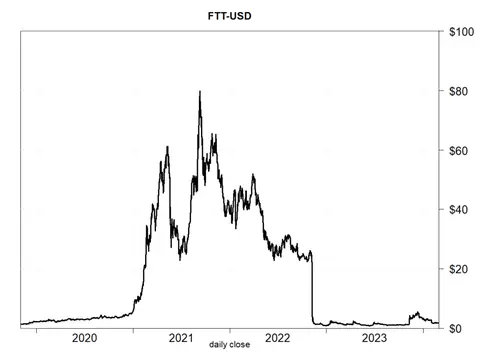
Four days later, on November 11, 2022, FTX filed for bankruptcy. The exchange had run out of money after customers tried to withdraw approximately $6 billion in 72 hours and discovered the funds were not there. [SOURCE: Axios/Reuters collapse timeline]
The assets were not fine. The assets were in Alameda Research, the connected trading firm that had been using FTX customer deposits to cover its own losses, service its own obligations, and fund the lifestyle of an operation that had purchased at least 19 properties in the Bahamas worth $121 million while its CEO slept on a beanbag and told the world he didn't care about material things. [SOURCE: Fortune, November 2022; DOJ trial record]
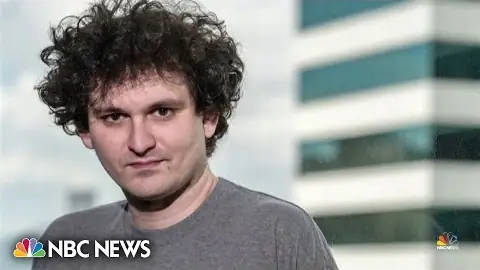
Samuel Benjamin Bankman-Fried — SBF, to everyone who followed him — had been the person the cryptocurrency industry most wanted to believe was the good one. He was MIT, Jane Street, effective altruism, the beanbag, the cargo shorts, the billions pledged to charity. He was the billionaire who made you think maybe the whole thing was serious after all.
He was convicted by a unanimous jury in November 2023 on all seven counts of fraud, conspiracy, and money laundering. He was sentenced to 25 years. His appeal was denied. He is serving time at a federal prison in California. He is eligible for release in 2044.
Samuel Benjamin Bankman-Fried was born on March 6, 1992, at the hospital on the campus of Stanford University in California.
His parents, Joseph Bankman and Barbara Fried, were — and remain — law professors at Stanford Law School. He was, quite literally from birth, inside the academic establishment that produces the credentialed elite of American professional life. The family is not incidental background. The family is the foundation of every door that opened.
He attended the Massachusetts Institute of Technology, where he studied physics. He has said he chose MIT over Caltech by flipping a coin. [SOURCE: Fortune trial timeline] He majored in physics and minored in mathematics. He was less interested in his classes, by his own account, than in spending time in the Epsilon Theta fraternity — a group whose members would later include several future FTX employees, among them co-founder Gary Wang.
At MIT he also encountered effective altruism — the philosophical framework developed in part by William MacAskill that holds that the right way to do good in the world is to reason carefully about which interventions produce the most benefit per dollar and direct your money and energy accordingly. One strand of effective altruism, called 'earning to give,' holds that someone capable of earning large amounts in finance should do so and donate most of the proceeds, rather than taking lower-paying work directly in the nonprofit sector.
Bankman-Fried found this argument compelling. He graduated in 2014 and took a job at Jane Street Capital — the quantitative trading firm — and reportedly gave away half his salary. [SOURCE: biography.com citing multiple sources] He had not yet made much money. He was already planning what he would do when he did.
The effective altruism framing was the most important thing about Sam Bankman-Fried that was not about money. It was the thing that made the money story different.
Most people who get rich in finance are not particularly interesting to the public as moral characters. They make money, they spend money, they give some of it away. The story is familiar enough to be unremarkable.
Bankman-Fried's story was different because the explicit, loudly-stated purpose of making money was to give it away. He had taken a philosophical position — not vaguely charitable, but specifically reasoned — that the highest use of his capabilities was to earn as much as possible in order to donate as effectively as possible to causes that reduced the most suffering. He had committed to giving away his entire wealth. He had signed the Giving What We Can pledge. He talked about pandemic prevention and animal welfare and the long-term future of humanity.
He also dressed badly. The T-shirts and cargo shorts and uncombed hair were not an accident. They were a signal: I am not doing this for the lifestyle. I do not care about the markers of success. I am accumulating money as a tool, not as an end.
He slept on a beanbag at the office. He took investor meetings while playing video games. He was vegan. He occasionally cooked vegan meals for the ten FTX employees who lived with him in the Bahamas penthouse that the company had purchased for $30 million. [SOURCE: Fortune / biography.com] The beanbag and the penthouse coexisted without apparent discomfort, because the penthouse was framed as a business necessity and the beanbag was the real him.
The effective altruism community celebrated him. He was profiled in magazines as proof that the framework produced good actors. He was the case study that 80,000 Hours and similar organisations pointed to when people asked whether 'earning to give' was a viable path to doing good. He donated $5 million to Joe Biden's 2020 presidential campaign. He donated approximately $40 million to Democratic politicians in the 2022 midterms, making him one of the largest political donors in the party. He said he had given similar sums to Republicans through dark money, because he feared liberal backlash. [SOURCE: biography.com; widely documented]
He was also — prosecutors at trial alleged, and a jury agreed — directing the misappropriation of $8 billion in customer funds into a trading firm that he controlled, while telling the world the exchange was fine.
He left Jane Street in 2017. He worked briefly at the Centre for Effective Altruism as development director. Then he started trading Bitcoin.
The opportunity he spotted was arbitrage — the same coin trading at different prices on different exchanges in different countries. In Japan, Bitcoin was trading for roughly 10% more than it was elsewhere. If you could buy it cheaply, move it to Japan, and sell it there, the margin was significant. Within months, Alameda Research — the quantitative trading firm he co-founded — was at times making approximately a million dollars a day. [SOURCE: Encyclopaedia Britannica; Cointelegraph]
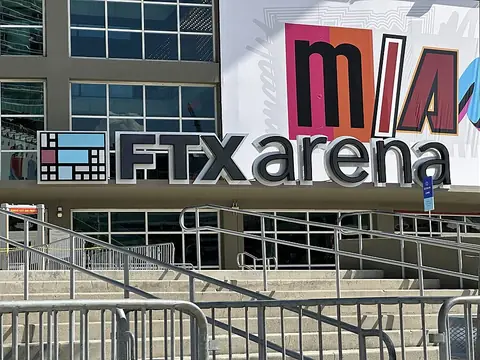
He founded FTX in April 2019 with Gary Wang, his MIT fraternity housemate, as co-founder. The exchange launched the following month. FTX was built to be better than the existing crypto exchanges — more sophisticated derivatives products, a cleaner interface, better risk management. It signed naming rights to the Miami Heat's arena in a deal reportedly worth $135 million. [SOURCE: Al Jazeera timeline] Tom Brady and Gisele Bundchen appeared in its advertising. In July 2021, it raised $900 million at an $18 billion valuation. In January 2022, it raised $400 million at $32 billion. [SOURCE: Al Jazeera / Axios timelines]
By 2021, Forbes had named Bankman-Fried the richest person under 30 in the world, with a net worth of approximately $22.5 billion. By the peak it was $26.5 billion. [SOURCE: Forbes / Effective Altruism Forum]
He moved operations to Hong Kong, then in 2021 to the Bahamas. The Bahamas offered a tax environment and a regulatory posture that suited his purposes. He and his colleagues purchased at least 19 properties in the country worth approximately $121 million in total. [SOURCE: Fortune, November 2022] He lived in a $30 million penthouse at the Albany resort compound — a 600-acre property on New Providence island that had hosted Tiger Woods and Justin Timberlake at its grand opening and sold individual homes for tens of millions.
Ten FTX employees lived in the penthouse. One of them was Caroline Ellison.
The brief for this case contains an explicit instruction: Caroline Ellison must be covered in full detail. She ran Alameda Research, she was his girlfriend, and she was the prosecution's key witness. That is not a side note. This is that section.
Caroline Ellison was born in November 1994 in Boston, Massachusetts. Her parents — Glenn Ellison and Sara Fisher Ellison — are both MIT economics professors. Like Bankman-Fried, she did not come from nowhere. She came from a household where quantitative economic reasoning was the intellectual medium of daily life.
She attended Stanford University. She then went to Jane Street Capital — the same firm where Bankman-Fried had worked, and where the two had met. This is where she built the trading skills she would later bring to Alameda.
Bankman-Fried persuaded her to join Alameda Research. She was, like him, attracted to the effective altruism framing — the idea that they were earning money in order to give it away to causes that mattered. She rose to become co-CEO of Alameda in 2021. When her co-CEO Sam Trabucco stepped down in August 2022 — three months before the collapse — she became sole CEO.
She and Bankman-Fried were romantically involved. On and off, across years. They lived in the Bahamas penthouse together. The relationship was not beside the work. It was inside it. She ran the firm he had founded. He was, per the DOJ's own sentencing letter, exercising the real control while she held the nominal title of CEO. [SOURCE: DOJ sentencing letter, September 17, 2024]
She directed the use of FTX customer funds to cover Alameda's losses and obligations. She knew the real balance sheet. She knew the gap between what the public statements said and what the numbers actually showed. That knowledge — of the mechanics and the reasoning and the decisions — is what made her testimony at trial decisive.
When FTX collapsed in November 2022 and the federal investigation began, she started speaking to the government before she was charged. She pleaded guilty in December 2022, immediately. She underwent extensive document review. She helped identify evidence in an investigation that was, in the government's words, 'hamstrung by Bankman-Fried's systematic destruction of evidence.' [SOURCE: DOJ sentencing letter, September 17, 2024]
He responded by leaking her private personal writings to the press while they were both facing charges. A federal judge found that this likely amounted to witness tampering and revoked his bail. [SOURCE: Yahoo News / Fortune reporting on the bail revocation] The government's sentencing letter states that she 'persevered despite harsh media and public scrutiny and Bankman-Fried's efforts to publicly weaponize her personal writings to discredit and intimidate her.' [SOURCE: DOJ sentencing letter, September 17, 2024]
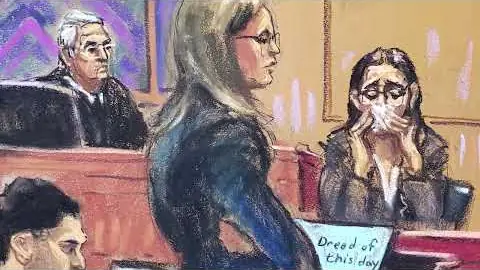
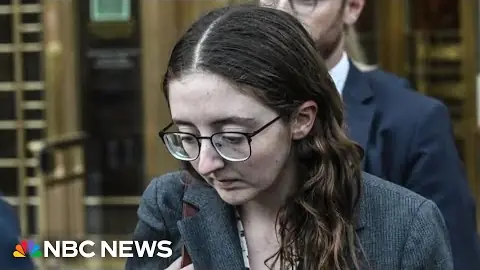
She testified in open court in October 2023 and named him. She described what he had directed. She explained the why — the decisions, the reasoning, the conversations. The jury convicted on all seven counts.
On September 24, 2024, Judge Kaplan sentenced her to two years in federal prison. She was tearful in the courtroom. [SOURCE: AP News, September 24, 2024] She was ordered to forfeit $11 billion — a legal forfeiture figure, not a personal theft amount. She has been released.
Bankman-Fried was sentenced to 25 years. Ellison to 2 years. The cooperation credit was 23 years.
The mechanism is simple to state and catastrophic in consequence.
FTX was a cryptocurrency exchange. When customers deposited money on FTX, that money was supposed to sit in FTX's custody — available for trading, available for withdrawal. It was customer money. The exchange held it on their behalf.
Alameda Research was a connected trading firm founded and controlled by Bankman-Fried. It made speculative bets in cryptocurrency markets. A trading firm is not supposed to have access to an exchange's customer deposits. The two entities are supposed to be entirely separate.
At FTX, they were not separate. Alameda borrowed from the FTX customer pool — billions of dollars, used for speculative investments, for political donations, for expensive real estate in the Bahamas, for loans to executives, for obligations the trading firm could not otherwise meet. [SOURCE: Second Circuit opinion, June 12, 2026; DOJ trial record]
The public-facing balance sheets showed a different picture. Investors and customers saw statements that did not reflect the reality of where their money was. When crypto markets fell in 2022 and Alameda's speculative positions lost value, the customer deposits it had been using as a backstop were insufficient. When customers tried to withdraw from FTX, the money was not there.
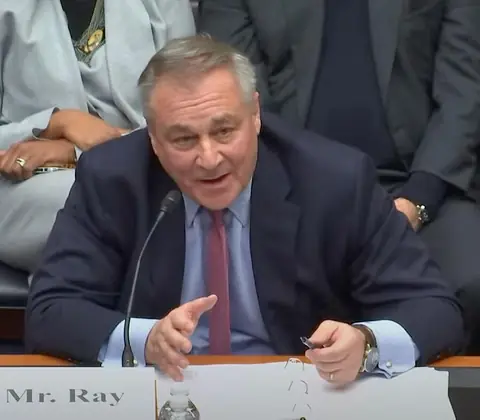
The new CEO appointed after the bankruptcy — John J. Ray III, who had overseen the Enron bankruptcy — said in a court filing: 'Never in my career have I seen such a complete failure of corporate controls and such a complete absence of trustworthy financial information as occurred here.' [SOURCE: People Matters / court filing, November 2022]
Ray had supervised one of the most notorious corporate collapses in American history. He had not seen anything like this.
It took nine days to end it.
Nine days from the CoinDesk article to the bankruptcy filing. Three years of building — the exchange, the Bahamas empire, the effective altruism brand, the political donations, the magazine covers — collapsed in nine days when customers tried to take their money out and discovered it was not there.
He did not flee. Not right away. After the bankruptcy filing he remained in the Bahamas, giving interviews, posting online, texting journalists, attempting to articulate a version of events in which the collapse was a liquidity crisis rather than a fraud.
He was scheduled to testify before Congress on December 13, 2022. On December 12 — the day before — Bahamian authorities arrested him at the request of the US government, based on a sealed indictment filed by the Southern District of New York. [SOURCE: PBS / AP / SDNY statement]
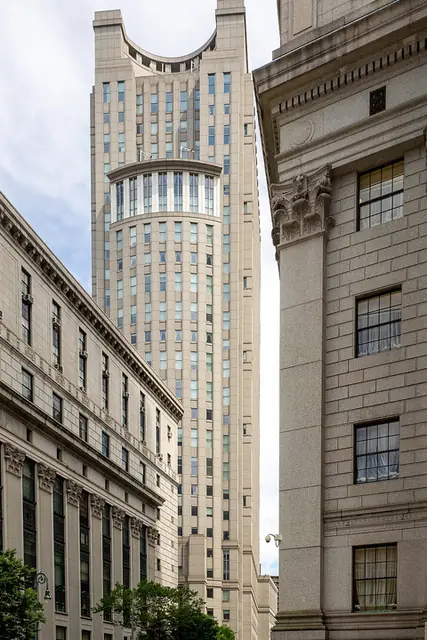
He was extradited to the United States. He appeared before a federal court in Manhattan. He pleaded not guilty to the charges — wire fraud, securities fraud conspiracy, commodities fraud conspiracy, money laundering conspiracy, and related counts.
Gary Wang and Caroline Ellison had already pleaded guilty and begun cooperating. Nishad Singh, FTX's engineering director, also pleaded guilty and cooperated. [SOURCE: trial record; Second Circuit opinion]
While on bail, he was accused of sharing Ellison's private personal writings with a reporter, in what a federal judge found 'likely amounted to witness tampering.' His bail was revoked and he was held in pretrial detention. [SOURCE: Fortune / Yahoo News citing federal court record]
The trial opened in October 2023 before Judge Lewis A. Kaplan in the Southern District of New York.
Bankman-Fried's defense strategy was built around a single claim: he had not intended to defraud anyone. He believed FTX was solvent. He believed the customer funds could be returned. The things that went wrong went wrong because of market conditions and poor accounting, not because of fraudulent intent.
The prosecution's response was the people who were there.
Gary Wang, the co-founder who built the code, testified about how the system worked. Nishad Singh, the engineering director, testified about what he had witnessed. And Caroline Ellison, CEO of Alameda Research and Bankman-Fried's former girlfriend, testified about the decisions, the directions, the conversations, the reasoning. She told the court not just what had happened but why — which is the specific knowledge that only the person closest to the decision-maker possesses.
The government described her testimony as 'a cornerstone of the trial.' [SOURCE: DOJ sentencing letter on Ellison, September 17, 2024]
He testified in his own defense. He maintained he had not intended to defraud. The jury deliberated and returned a verdict.
November 2, 2023 — one year to the day after the CoinDesk balance sheet article — the jury convicted Samuel Bankman-Fried on all seven counts.
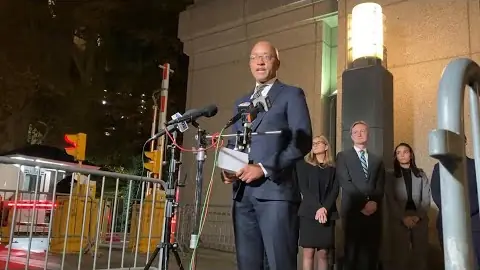
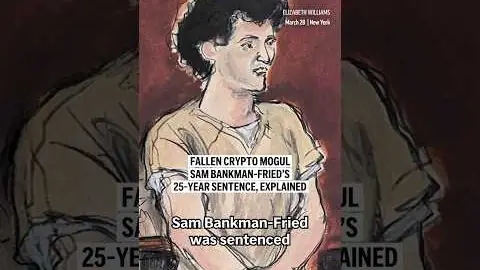
On March 28, 2024, Judge Lewis A. Kaplan sentenced Samuel Bankman-Fried to 25 years in federal prison.
Prosecutors sought 40 to 50 years. The defense sought 5 to 6.5 years. Judge Kaplan sentenced him to 25 — below what the prosecution asked for, and roughly four times what the defense asked for. [SOURCE: SDNY sentencing; widely documented]
Bankman-Fried spoke at sentencing. He expressed remorse. He maintained, through lawyers and directly, that he had not acted with the intent the fraud statute requires — that he had genuinely believed the customers could be made whole.
The Second Circuit addressed this directly when it affirmed his conviction in June 2026. Circuit Judge Barrington Parker wrote for the three-judge panel: 'FTX customers were defrauded as soon as Bankman-Fried transferred their money to Alameda regardless of how strongly he believed he might later return the money.' [SOURCE: Bloomberg / Second Circuit, No. 24-961-cr, June 12, 2026]
Temporary misappropriation is still fraud. The intended repayment is not a defence.
Each case in this series has a thesis. A single thing it documents about how fraud works at scale.
Hushpuppi: the persona was the marketing. Malone Lam: the speed. Do Kwon: the product was the lie. Madoff: duration was the disguise. Sam Bankman-Fried: the trust of the smart.
He was not just trusted. He was trusted by the people who were most careful about trust. The institutional investors who did due diligence on him. The magazine editors who wrote about him. The effective altruism community that held him up as proof of concept. The senators who invited him to testify about crypto regulation. These were not naive people who simply believed what they were told. They were people who thought about credibility seriously and concluded that his was real.
The fraud ran inside that credibility. It ran inside MIT and Jane Street and the giving pledges and the beanbag and the cargo shorts. It ran inside the persona of the person who was doing this for the right reasons.
And it was exposed not by a regulator, not by an auditor, not by a sophisticated institutional investor who looked past the persona. It was exposed by a balance sheet that a journalist obtained and published. And it was prosecuted successfully because the people closest to him — his co-founder, his engineering director, the woman who ran his trading firm and had been his girlfriend — chose to tell the truth.
She told the truth despite him leaking her diary to the press to stop her. That is the last detail of the case that belongs here.
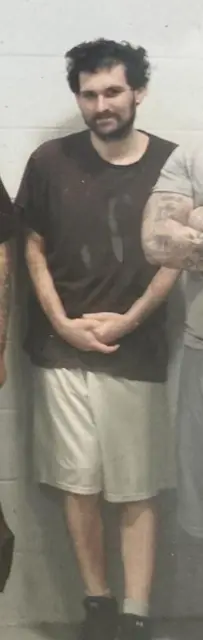
He is in California, eligible for release in 2044, having applied for a presidential pardon that the White House has signalled it will not grant. The effective altruism community that celebrated him has had to reckon with what he represented and what the framework was actually being used for. The $8 billion in customer funds is the subject of ongoing bankruptcy proceedings. Some customers may recover some of their money.
He broke the trust of the people who were most certain he was the good one. That is the sentence the case leaves behind, beyond the 25 years.
$8B = customer funds misappropriated (loss figure, DOJ/trial record). Different from the $11B forfeiture ordered against Ellison. Bankman-Fried: convicted, sentenced 25 years, appeal denied June 2026, serving California, eligible 2044. Ellison: cooperated, sentenced 2 years, released. Both are in the record. The cooperation credit is 23 years.
IDENTITY
CASE RECORD
WHAT THIS CASE ESTABLISHED
 ▶ WATCH
 ▶ WATCH
 ▶ WATCH
 ▶ WATCH
 ▶ WATCH
 ▶ WATCH
 ▶ WATCH
 ▶ WATCH
 ▶ WATCH
 ▶ WATCH