Kwon Do-hyung (Do Kwon)
TAP TO READ FULL NARRATIVE — $40 BILLION. FIVE DAYS. TWO DEPEGS, ONE LIE. (3,900 WORDS)
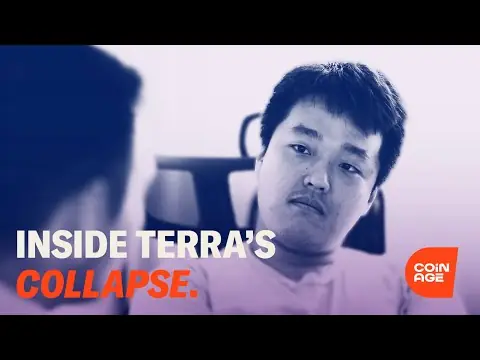
On May 9, 2022, as TerraUSD began to lose its dollar peg and the price of LUNA started the free-fall that would erase tens of billions of dollars in the coming days, Do Kwon posted on X — then Twitter.
"Deploying more capital — steady lads."
Posted May 9, 2022, as UST began its terminal depeg. Cited by Judge Engelmayer at sentencing as devastating to investors. [SOURCE: court record / Decrypt sentencing coverage]
The message landed on hundreds of thousands of followers who had built their savings in an ecosystem he had spent years promoting as mathematically sound, self-correcting, and engineered to hold its value regardless of market conditions. The algorithm was the product. Steady lads was the assurance.
Within five days, approximately $40 billion in value had been wiped from the Terra ecosystem. [SOURCE: BBC, Dec 2025] UST never recovered its dollar peg. LUNA collapsed from its all-time high of over $100 (April 2022) to fractions of a cent. The algorithm — the thing the product was supposed to be — had failed.
And before that terminal collapse, the algorithm had already failed once. In May 2021. And when it failed that first time, Do Kwon had not told investors the algorithm had been bailed out by a trading firm secretly buying millions of dollars of the coin. He had told them the algorithm had fixed it. [SOURCE: court documents cited by BBC]
That lie — not the collapse itself, but the lie about what had caused the recovery — is the crime. The code was real. The promise was not.
He sold a mathematical promise. When the math failed, he replaced it with a buy order and told the world the machine had done it. That is the fraud.
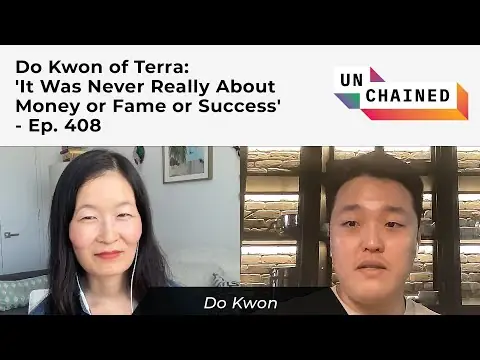
Kwon Do-hyung — Do Kwon, as the world knew him — grew up in South Korea and attended Stanford University, the California institution that has produced a disproportionate share of the technology industry's most significant founders, products, and failures.
He graduated with a computer science degree. The academic credentials gave him something that proved useful in the world he moved toward: the appearance of technical authority. When he described how TerraUSD worked, how the algorithm maintained the peg, how the mathematics guaranteed stability, he was not describing it as a layman speculating about what computers could do. He was describing it as a Stanford-educated computer scientist who had designed the system himself.
He co-founded Terraform Labs in 2018 and based it in Singapore — a jurisdiction with established crypto infrastructure, regulatory sophistication, and access to global capital. The firm built two linked products: TerraUSD (UST), an algorithmic stablecoin intended to hold a stable value of one US dollar, and LUNA, a companion token whose value was designed to absorb UST's volatility and maintain the peg through a mint-and-burn mechanism.
He called himself the 'crypto king.' His followers, who called themselves Lunatics, were devoted in the way that online communities devoted to a founder who speaks their language tend to be devoted — with the specific intensity of people who have bet money on the vision and need the vision to be true.
He was 34 years old when he was sentenced. [SOURCE: Decrypt, Dec 2025] He had built a multi-billion dollar ecosystem, attracted institutional investors, and established himself as one of the most prominent figures in the cryptocurrency world. He had also, according to the court that sentenced him, chosen to lie. [SOURCE: Judge Engelmayer, sentencing record]
A stablecoin is a cryptocurrency designed to hold a stable value — typically pegged to one US dollar. The utility is obvious: in a market where Bitcoin can move 20% in a day, an asset that reliably equals one dollar lets you hold crypto exposure without the volatility.
There are two main ways to build a stablecoin. The first is to back every token with real dollars or dollar-equivalent assets held in reserve. This works reliably — USDC and Tether operate roughly this way — but requires capital, creates counterparty risk, and places control with whoever holds the reserves.
The second way is to use an algorithm. This was UST's proposition. Instead of reserves, UST would maintain its dollar peg through a mathematical relationship with LUNA. When UST traded below a dollar, market participants could burn UST and receive LUNA at a profit — reducing UST supply and pushing the price back up. When UST traded above a dollar, participants could mint new UST by burning LUNA — increasing supply and pushing the price back down. Automatic. Decentralized. No human custodian of reserves. The code does it.
This was the product. Not just a stablecoin — an algorithmic stablecoin. A mechanism that maintained value through code rather than custody. The entire value proposition rested on the mechanism working.
The Anchor Protocol — Terra's own savings product — offered 20% annual yields on UST deposits. [SOURCE: Decrypt sentencing coverage, citing victim testimony] For context, US savings accounts in the same period offered under 1%. A man from Ukraine testified at Kwon's sentencing that he had placed 17 years of savings into the system after Kwon's assurances convinced him it was safe. [SOURCE: Decrypt, Dec 2025]
The 20% yield required that the algorithm sustain the peg. If the peg broke, the yield was fiction. If the algorithm was fiction, the peg was fiction. If the peg was fiction, 17 years of savings was fiction.
In May 2021, TerraUSD lost its dollar peg for the first time.
What happened next is the core of the fraud as stated in the court documents. According to those documents, when UST fell below $1, Kwon arranged for a trading firm to secretly purchase millions of dollars of the coin to artificially restore its price. [SOURCE: BBC Peter Hoskins, Dec 12 2025, citing court documents]
Then he told investors that a computer algorithm had restored the value.
That was false.
The distinction is not subtle. The entire pitch of an algorithmic stablecoin — the reason people chose UST over a reserve-backed stablecoin — was that no human intervention was required. The code did it. That was the product. When the code failed in May 2021 and a trading firm had to step in and buy the coin to prop the price, the product had demonstrably not worked as described.
Kwon knew this. He said the algorithm had fixed it. The investors who read that, who saw the price recover, who kept their UST deposits in Anchor Protocol, who told their friends the system worked — they believed something that was not true. And they kept believing it for another year.
When the algorithm failed, he used a human to fake it — then told the world the machine had done it. That is the moment the product became a lie, and telling it is the crime.
Do Kwon had an online presence that Judge Engelmayer would later characterise — from the bench at sentencing — as that of a cult leader who traded on victims' trust. [SOURCE: Decrypt sentencing coverage, Dec 2025]
The characterisation was not invented by the judge. It was observable from the public record of Kwon's own posts.
"I don't debate the poor."
Posted publicly on X. Cited by Judge Engelmayer at sentencing as emblematic of Kwon's posture toward critics. [SOURCE: Decrypt / Inner City Press sentencing coverage]
Critics who raised technical concerns about the stability of the UST-LUNA mechanism — and there were credible ones, documented publicly — were often dismissed, mocked, or ignored. Kwon's confidence was absolute and performed. The community around Terra reflected that confidence. The Lunatics believed because their leader believed, and their leader communicated belief with the specific certainty of someone who had either done the mathematics or decided the mathematics could be safely ignored.
The Anchor Protocol's 20% yield attracted retail investors who would not normally have engaged with algorithmic DeFi products. It attracted them because 20% is a number that needs no technical explanation. 20% sounds real regardless of whether the mechanism that produces it is real.
Kwon promoted the ecosystem constantly. He promoted it on Twitter. He promoted it in interviews. He promoted it to institutional investors, to retail depositors, to the Korean community that had adopted Terra with particular enthusiasm. The persona was the marketing. The marketing was the confidence. The confidence was, in the end, a lie about what the algorithm had done in May 2021.
The terminal collapse began in the first week of May 2022.
Large withdrawals from the Anchor Protocol began. UST started trading below its dollar peg. The mint-and-burn mechanism activated — exactly as designed — but the scale of the depegging triggered a dynamic that the algorithm was not built to handle: as LUNA was minted to absorb UST's excess supply, LUNA's price fell, which reduced the value of the mechanism that was supposed to restore the peg, which caused more depegging, which required more LUNA to be minted, which further reduced LUNA's value.
It was a death spiral. Not a bug — a structural vulnerability in the design that critics had identified publicly before the collapse. The faster the algorithm tried to fix the peg, the faster it destroyed the value of the mechanism doing the fixing.
Steady lads was posted into this.
Over five days, LUNA fell from approximately $80 (its pre-collapse trading price in early May 2022) to fractions of a cent. UST broke and did not recover. Approximately $40 billion in market value was destroyed. [SOURCE: BBC; DOJ/SDNY] The figure is market value lost — the aggregate decline in the value of tokens people held. It is not a theft figure. Nobody took $40 billion from an account. But the people holding UST because they believed a dollar would always be a dollar, and the people holding LUNA because the ecosystem had always recovered, watched the numbers go to near zero and did not get them back.
First depeg. Trading firm secretly buys UST to prop price. Kwon publicly attributes recovery to the algorithm. [Court documents / BBC]
Terminal depeg begins. Large Anchor withdrawals trigger UST falling below $1. LUNA death spiral activates.
'Deploying more capital — steady lads.' Posted to Twitter as the collapse accelerates. [Court exhibit / Decrypt]
LUNA collapses from ~$80 (pre-collapse price, May 2022) to fractions of a cent. UST loses peg permanently. ~$40B in market value destroyed. [BBC / DOJ]
Terra's collapse triggers contagion across the crypto market. Several other firms including Celsius and Three Arrows Capital subsequently fail in part due to Terra exposure.
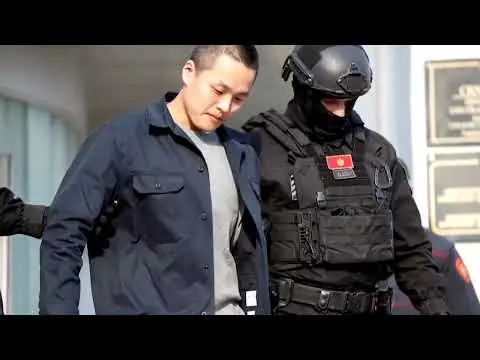
After the collapse, Do Kwon went on the run.
He denied it publicly. Asked in interviews whether he was hiding, he said he was not. He maintained that he was cooperating with authorities, that the collapse was a market event rather than a fraud, that the code had done what it was designed to do. South Korean authorities disagreed. In September 2022, they issued an arrest warrant. Interpol issued a Red Notice — the international alert used for wanted fugitives. [SOURCE: Interpol / widely documented]
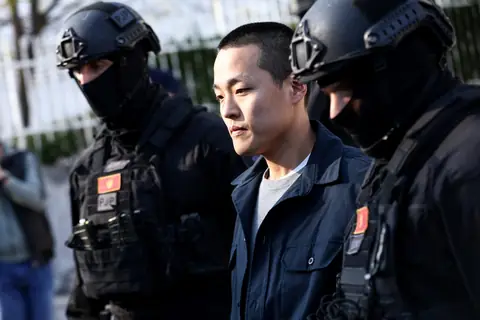
South Korean prosecutors believed he was in Serbia, which had no extradition treaty with South Korea. Montenegro, which borders Serbia, has dramatic coastline and mountains and, according to reporting at the time, a politician with whom Kwon had a long-standing association and whose campaigns he may have funded. [SOURCE: Fortune, June 2023 — cited as allegation from reporting] Whether Montenegro felt like a safe harbour or simply the next stop on a route, he ended up there.
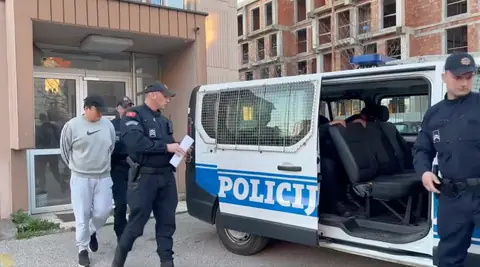
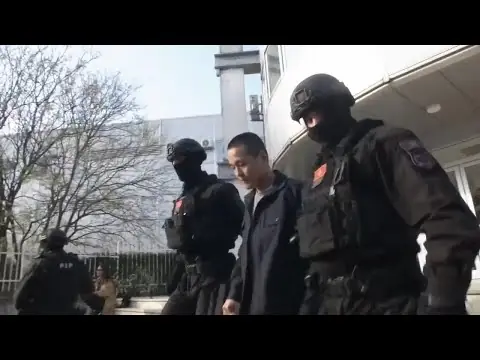
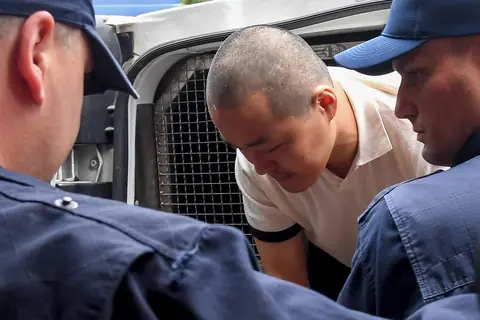
On March 23, 2023, Kwon attempted to board a flight at Podgorica Airport — Montenegro's capital — bound for Dubai. He was carrying a Costa Rican passport. Montenegro police detained him. His identity was confirmed through photographic and biometric data. Also found in his luggage: Belgian passports, a South Korean passport, laptop computers, and other devices. [SOURCE: Coindesk / The Block / widely documented from police statement]
Han Chang-joon, Terraform Labs' former chief financial officer, was arrested alongside him.
Kwon told the Montenegrin court that he had acquired the Costa Rican passport through a legitimate agency in Singapore, recommended by a friend. He acquired the Belgian passport through another agency. A Montenegro court sentenced him to four months for using forged documents — time he had already largely served in pretrial detention. [SOURCE: The Register, June 2023; widely documented] The extradition battle between South Korea and the United States took longer.
The US won. Kwon arrived in American custody and appeared before Judge Paul A. Engelmayer in the Southern District of New York. In January 2025 he pleaded not guilty. In August 2025 he changed his plea — guilty to wire fraud and conspiracy to defraud. [SOURCE: DOJ/SDNY; Reuters]
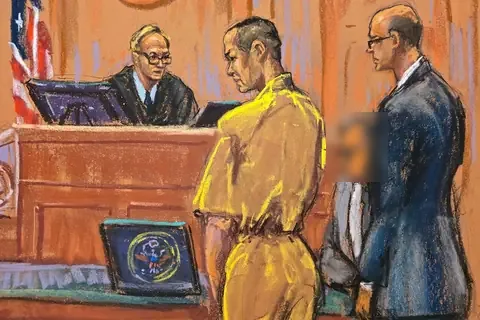
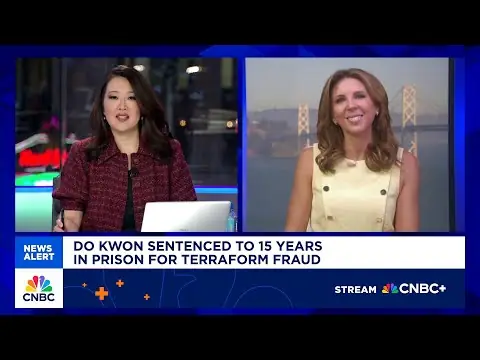
On December 11, 2025, Do Kwon stood before Judge Paul A. Engelmayer in a Manhattan courtroom wearing a yellow prison jumpsuit. He was 34 years old.
The victims spoke first. A man from Ukraine described losing nearly $200,000 — seventeen years of savings — after Kwon's public assurances had convinced him that the system was safe. He had invested through Anchor Protocol, attracted by the 20% annual yield, trusting the man who had told him and hundreds of thousands of others that the algorithm held. [SOURCE: Decrypt sentencing coverage, Dec 2025]
Then the judge spoke.
"In the history of federal prosecutions, there are few frauds that have caused as much harm as you have."
"You chose to lie." — "You chose poorly."
"You have been bitten by the crypto bug and I don't think that's changed. You must be incapacitated."
The judge compared Kwon to the leader of a cult, who traded on victims' trust.
He described the $40B figure as 'eye-popping,' even for the Southern District of New York, where some of the largest financial crimes in history have been prosecuted.
Engelmayer described Kwon's famous tweets — 'Deploying more capital — steady lads' and 'I don't debate the poor' — as devastating to investors and emblematic of the posture that had made the fraud possible. He compared Kwon to a cult leader not as a rhetorical flourish but as a characterisation of how the scheme had functioned: by substituting the leader's authority for the independent verification that might have revealed the product's failure.
Prosecutors had sought 12 years. Kwon's lawyers had sought 5 years. Kwon himself, in written submissions, had deemed 5 years a fair punishment. [SOURCE: Forklog / The Block, Dec 2025]
Kwon addressed the court.
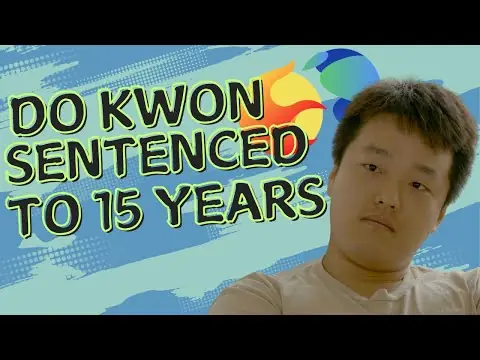
Judge Engelmayer acknowledged the letter Kwon had written to the court, noting it was 'beautifully written, for your daughter one day.' He gave credit for 17 months and 8 days served in pre-extradition custody. He stated that 15 years was the least he could impose under the circumstances. And he delivered it.
15 YEARS
US District Court · Southern District of New York · Judge Paul A. Engelmayer
Credit: 17 months and 8 days served pre-extradition (US + Montenegro)
South Korea, separately, faces Kwon with proceedings that could produce a sentence of up to 40 years. The Manhattan sentence does not preclude further accountability in his home country. [SOURCE: Sharpe.ai aggregating Korean Times reporting, Dec 2025]
The Ukraine victim is one person. There were hundreds of thousands.
Terra's ecosystem was estimated to have drawn in well over a million users across the Anchor
Protocol and the wider Terra applications before the collapse. The number of individual holders
of UST and LUNA ran into the hundreds of thousands. When both tokens went to near zero, every
one of them was holding a claim on value that no longer existed.
The geographic concentration was not uniform. South Korea, Kwon's home country, had adopted
Terra with particular enthusiasm — the community was large, vocal, and heavily invested. After
the May 2022 collapse, reporting from Korea documented a surge in distress, including a
documented spike in calls to suicide-prevention services and multiple suicides attributed by
local media to the losses. [SOURCE: Korean media reporting, 2022 — verify before publication]
That is the part the numbers hide. A 20% yield, marketed to people who had never touched
decentralised finance, promising a dollar that would always be a dollar — and behind it, a
mechanism that could not hold. The people who trusted it were not sophisticated arbitrageurs.
They were the ordinary end of the market, attracted by a number they understood.
Anchor Protocol was Terra's own savings product. It offered approximately 20% annual yield on
UST deposits — in a period when US savings accounts paid under 1%. [SOURCE: Decrypt; court
testimony]
That single number is the reason the scheme grew as fast as it did. A 20% return needs no
technical explanation. It does not require the depositor to understand mint-and-burn mechanics,
algorithmic peg restoration, or the difference between a reserve-backed stablecoin and a
synthetic one. It requires only the belief that the number is real — and the authority of the
man saying it.
The mathematics, however, were always against it. The yield had to come from somewhere. In
Anchor's design, it was subsidised — meaning it was paid from capital that had to keep arriving.
A 20% rate paid from fresh deposits is, structurally, a Ponzi-shaped obligation regardless of
whether anyone intends a fraud: it works exactly as long as inflows exceed the cost of the
yield, and stops the moment they do not.
In May 2022, inflows reversed. The largest withdrawals in Anchor's history began. That is the
trigger — not a hack, not a bug, but depositors doing what depositors do when confidence shifts.
Terra did not fall alone.
The $40 billion destroyed inside the Terra ecosystem was the headline. The secondary damage was
larger and harder to price. Firms that held Terra exposure, or that had borrowed against it, or
that had built strategies around its yield, failed in the months that followed:
in July 2022. Its collapse is directly tied to the post-Terra credit contraction. Its founder,
Alex Mashinsky, later pleaded guilty to fraud in a separate case.
liquidation in 2022, having held substantial LUNA exposure.
compounding the next as the credit that had flowed freely in the bull market reversed.
The chain reaction matters to the story because it reframes the scale. Terra's own collapse was
a $40 billion event. The industry damage it set off was larger — and it happened because tens of
thousands of market participants had treated an algorithmic promise as a foundation. One broken
product, used as an assumption by an entire sector, collapsed a chain no single fraudster
controlled.
The mechanism that destroyed Terra was not discovered in May 2022. It was described publicly,
in technical terms, by critics long before the collapse.
The core objection was always the same, and it was correct: the design worked only while LUNA
had value. In a depeg, the protocol would mint LUNA to absorb excess UST supply — but minting
LUNA dilutes it, which lowers its price, which reduces the value of the mechanism meant to
restore the peg, which causes more depegging, which requires more LUNA. The death spiral was
not an unforeseen failure. It was the design's predictable end state, articulated by critics
before the token was ever large.
Those critics were dismissed. Kwon's own public posture — "I don't debate the poor" — was a
statement not about poverty but about the refusal to engage. Technical challenges were met with
the founder's confidence rather than with independent verification. The community around Terra
adopted the founder's certainty as its own.
The parallel to Case 004 is exact in structure, if opposite in scale. In Madoff, a whistleblower
spent eight years telling the regulator the numbers were impossible, and the warning did not
land before the collapse. In Terra, the warning was public, technical, and repeated — and it was
mocked. In both cases, the failure was not that nobody knew. It was that the knowing was not
enough against a founder's authority.
Each case in this series is built on a thesis.
Case 001 (Hushpuppi): the persona was the marketing. A crafted identity, sold so convincingly
that the fraud was invisible inside it.
Case 002 (Malone Lam): the speed. Twenty years old, caught within a month, because the spending
was louder than the theft.
Case 004 (Madoff): the duration. Forty-eight years, built on the trust of a name nobody thought
to question.
Case 003 (Do Kwon): the product was the lie. The others sold themselves. He sold a mechanism —
an algorithmic stablecoin that was advertised to work by mathematics, with no human in the loop.
When the machine failed in May 2021, a human bought the coin to fake the recovery, and he told
the world the machine had done it. That is the fraud, and it is the whole fraud.
The code was real. The promise was not.
IDENTITY
CASE RECORD
WHAT THIS CASE ESTABLISHED
 ▶ WATCH
 ▶ WATCH
 ▶ WATCH

 ▶ WATCH
 ▶ WATCH
 ▶ WATCH
 ▶ WATCH
 ▶ WATCH
JUDGE ENGELMAYER — SENTENCING DEC 11 2025 — SDNY
MAY 9, 2022 — AS UST COLLAPSED
@stablekwon · May 9 2022 · cited by Judge Engelmayer at sentencing as devastating to investors [SOURCE: court record]
RESPONSE TO CRITICS
@stablekwon · cited by Judge Engelmayer as emblematic of Kwon’s posture toward critics [SOURCE: Decrypt / Inner City Press]