LIVE
TRACECHAIN™FORENSICS
FRAUD INTELLIGENCE · CASE FILES · GLOBAL SCOREBOARD
REPORT FRAUD Find your country and who to contact ▸🔍 Search cases, companies, countries, agencies
INTEL
PIG BUTCHERING: now the #1 loss category in the US by estimated volume / HUSHPUPPI: the Instagram that became the evidence -- Case 001 open / BEC: one spoofed email, one wire, seven figures -- see the methodology / ROSS ULBRICHT: full pardon January 21 2025 after 11+ years -- Case 013 open / ALL FIGURES LABELED: estimate vs conviction vs market collapse -- see Methodology / UNODC 2023: $5.4B estimated annually from SE Asia pig-butchering compounds [UNVERIFIED] / PIG BUTCHERING: now the #1 loss category in the US by estimated volume / HUSHPUPPI: the Instagram that became the evidence -- Case 001 open / BEC: one spoofed email, one wire, seven figures -- see the methodology / ROSS ULBRICHT: full pardon January 21 2025 after 11+ years -- Case 013 open / ALL FIGURES LABELED: estimate vs conviction vs market collapse -- see Methodology / UNODC 2023: $5.4B estimated annually from SE Asia pig-butchering compounds [UNVERIFIED]
Ding Ning¥59.8B
NO WANTED POSTERarrested in China Jan 2016; no public wanted notice found
#7 OF 102

Ding Ning

INDIVIDUALBORN IN 🇨🇳 CHINA ▸
CASE 031 · PONZILIFE SENTENCE
Ezubao · life imprisonment · Beijing 2017
¥59.8B
WHAT WAS TAKEN
About $9B (59.8B yuan, official figure) from ~900,000 ordinary Chinese savers.
HOW
Ran Ezubao, an online lending site where ~95% of the loan listings were fake; new deposits paid old investors.
AT A GLANCE
Born
~1982 · Anhui province, China (34 in Feb 2016)
Court
Beijing No. 1 Intermediate People’s Court
Sentenced
Sept 12, 2017 · life imprisonment + 100M yuan fine
Story
TAP TO READ FULL NARRATIVE — THE NINE HUNDRED THOUSAND (1,400 WORDS)
· PROLOGUE ·
The Number That Does Not Fit

Madoff (Case 004) defrauded approximately 37,000 investors. That figure appears throughout his case file as a marker of scale.

Ding Ning's Ezubao operation is estimated to have defrauded approximately 900,000 investors — twenty-four times that number. By the official victim count, it is one of the largest Ponzi schemes ever recorded. [SOURCE: Chinese state media / official court record]

The platform raised 59.8 billion yuan — approximately $9 billion at 2015-2016 exchange rates — through a peer-to-peer lending operation that ran from 2014 to December 2015. Most of the investment projects listed on the platform were fabricated. Investors were promised returns of 9 to 14.6 percent annually. The money that came in was used to pay the returns of earlier investors — the Ponzi cycle — and to fund a lifestyle of extraordinary personal extravagance that included gifts such as a pink diamond ring reportedly worth 12 million yuan and a Singapore villa worth 130 million yuan for the company's president, Zhang Min. [SOURCE: CBS; Chinese state media]

In December 2015 Chinese police moved on Ezubao; 21 people, including Ding Ning, were formally arrested in January 2016. On 12 September 2017 a Beijing court sentenced him to life imprisonment and a fine of 100 million yuan. His brother Ding Dian also received life; 24 other defendants received 3 to 15 years.

· PART ONE ·
What Ezubao Was — P2P Lending in China 2014-2015

Peer-to-peer lending — P2P — was one of the fastest-growing financial sectors in China between 2012 and 2018. The model: an online platform connects borrowers who need capital with investors who want returns. The platform takes a fee. The investor gets interest from the borrower.

The appeal in China was specific to the moment. Traditional Chinese banks channeled credit primarily to state-owned enterprises and large corporations. Small businesses and individuals struggled to access loans. Retail investors, simultaneously, had limited high-yield options — bank deposit rates were low, the stock market volatile. P2P platforms offered both sides of this equation a solution: borrowers could get capital, investors could earn 9 to 15 percent. Thousands of platforms emerged.

Regulation was minimal and slow to develop. The industry grew faster than oversight could follow. At its peak, there were estimated to be over 3,000 active P2P lending platforms in China. Most were legitimate. Some were not. Ezubao, operated by Anhui Yucheng Holdings Group under Ding Ning's leadership, was the largest and the most fraudulent.

Ezubao launched in 2014. Within a year it had grown to one of the country's largest P2P platforms by volume, attracting investors with promises of returns between 9 and 14.6 percent annually. The platform appeared to be matching investors with real financing projects — equipment leasing, infrastructure loans, business credit. Most of these projects, per the prosecution, were fictional. Ding Ning's company created fake project listings to give investors the appearance of understandable, specific investments.

· PART TWO ·
The Fraud — What Was Real and What Was Not

The prosecution established that approximately 95 percent of Ezubao's listed investment projects were fabricated. [SOURCE: Chinese state media citing prosecution; Reuters — verify exact percentage and its source]

The mechanism was a classic Ponzi: early investors received their promised returns, funded by the influx of new investor capital rather than by real investment returns. The platform appeared healthy and transparent. Its marketing emphasized the specific, real-world nature of its lending — names, addresses, and details for projects that did not exist.

The scale of personal enrichment was also documented in the prosecution: Ding Ning spent hundreds of millions of yuan on luxury goods, real estate, and personal expenses. Chinese state media reported that he spent more than 1 billion yuan on gifts, including 550 million yuan in cash, a Singapore villa and a 12 million yuan pink diamond ring for Zhang Min, president of Yucheng Global. He and his family received hundreds of millions in transfers from the Ezubao operation. [SOURCE: Chinese state media — treat as official prosecution account]

The collapse came in December 2015 when police moved in; 21 people were formally arrested in January 2016. Investigators later dug up about 1,200 documents, in 80 bags, buried six metres underground outside Hefei. The platform froze and hundreds of thousands of investors could not access their funds. The human consequence was severe — many investors had placed life savings, retirement funds, or borrowed money into the platform. Reports at the time documented protests outside government buildings in multiple cities by investors demanding their money back.

· PART THREE ·
The Series Context — What Makes This Case Different

Every other Ponzi case in this series involves a relatively contained investor group: Madoff's clients were wealthy individuals and institutions. Stanford's (Case 010) were CD buyers. Allen Stanford at least targeted people with some financial sophistication.

Ding Ning's victims were mass market. P2P platforms in China targeted ordinary wage earners who were depositing small amounts — some as little as a few hundred yuan — into what they understood to be supervised investment products. The ~900,000 investor count reflects that reality. It is not 900,000 sophisticated investors who should have known better. It is ordinary people who had few alternatives and trusted a regulated-looking online platform.

This is the Ponzi case where the victim count is the thesis. In every other case in this series — Madoff, Stanford, Ponzi himself — the dollar figure is the defining number. Ezubao's dollar figure (~$9 billion) is significant but comparable to Stanford ($7.2 billion). The victim count is not comparable to anything else. It is the largest in history.

· PART FOUR ·
The Conviction and the P2P Aftermath

On 12 September 2017, the Beijing No. 1 Intermediate People's Court sentenced Ding Ning to life imprisonment and a 100 million yuan fine; he was also convicted of illegally possessing guns and smuggling precious metals. His brother Ding Dian received life and a 70 million yuan fine. 24 other defendants received 3 to 15 years. The court put the fraud at more than 50 billion yuan from about 900,000 investors. [SOURCE: Reuters; Xinhua — verify exact sentencing date and court]

The prosecution was the highest-profile output of China's crackdown on P2P lending fraud. The broader P2P collapse — thousands of platforms failing between 2016 and 2020 — generated additional prosecutions across the country, but none reached the scale of Ezubao.

By 2020, the Chinese government had effectively closed or converted the entire P2P lending sector. Every platform operating in the space was required to either obtain a banking licence — a bar very few could meet — or shut down. The regulatory response was total: an entire financial sector was eliminated as a consequence, in part, of what Ding Ning had done to the most visible platform in it.

The investor recovery was limited. The assets Ding Ning and his co-defendants accumulated were seized and distributed through a restitution process, but the amounts recovered represent a fraction of what investors lost. The gap between the fraud's scale and the recovery is the usual story of a Ponzi — by the time the scheme collapses, most of the money is gone.

VERIFIED SOURCES AND SOURCE CAUTION
PRIMARY SOURCES ARE CHINESE STATE MEDIA AND COURT RECORDS. This is the only available primary record. Treat all official figures as officially reported and note the source type throughout. Secondary coverage from Reuters and Bloomberg is limited.
[1] Xinhua / People's Daily — official Chinese state coverage of the arrest (December 2015), prosecution, and conviction (12 September 2017). Primary source for official figures. Treat as official state reporting.
[2] Reuters — international coverage of Ezubao collapse and initial arrests. December 2015. Limited but secondary verification of scale and arrest details.
[3] Beijing No. 1 Intermediate People's Court — 12 September 2017. Life imprisonment for Ding Ning; 100 million yuan fine. Brother Ding Dian life. 24 others 3–15 years. [SOURCE: Xinhua / China Daily]
[4] Bloomberg — P2P lending industry context and regulatory response. 2016-2020 coverage.
CURRENCY NOTE 59.8 billion yuan at 2015-2016 exchange rate (~6.5 yuan/USD) = approximately $9.2 billion. Label as approximate conversion with date. Do not use current exchange rates.
TO VERIFY Exact sentencing date and court name · Exact victim count (official sources vary between 'approximately 900,000' and 'nearly one million') · Percentage of projects that were fabricated (95% is the widely reported prosecution figure — verify to court record) · Co-defendant sentence details · Amount recovered and distributed to investors · Ding Ning's current incarceration status
Bio
BIO

IDENTITY

NAME
Ding Ning (丁宁)
BORN
~1982 · Anhui province, China (34 in Feb 2016)
BEFORE
Left school at 17; worked in his mother’s hardware factory
COMPANY
Anhui Yucheng Holding Group · the Ezubao (e租宝) lending platform
THE PROMISE
9–14.6% a year on “loans” to listed companies

CASE RECORD

STOPPED
December 2015 · police investigation
ARRESTED
Jan 14, 2016 · 21 people formally arrested
COURT
Beijing No. 1 Intermediate People’s Court
SENTENCED
Sept 12, 2017 · life imprisonment + 100M yuan fine
ALSO
Illegal gun possession; smuggling precious metals
OTHERS
Brother Ding Dian: life · 24 others: 3–15 years
People
THE PEOPLE AND THE PLATFORM
THE BROTHERLIFE
Ding Dian
Co-defendant
Also sentenced to life, with a 70 million yuan fine.
SOURCE: Xinhua / China Daily
THE PRESIDENTCONVICTED
Zhang Min
Yucheng Global
Given a Singapore villa, a 12M yuan diamond ring and 550M yuan in cash, state media said. Called it a Ponzi scheme.
SOURCE: CBS · state media
THE EVIDENCE6 METRES DOWN
1,200 documents
80 bags
Buried outside Hefei; two excavators took 20 hours to dig them up.
SOURCE: Wikipedia
THE COMPANYFINED
Yucheng Global
1.8B yuan fine
Anhui Yucheng Holding Group also fined 100M yuan.
SOURCE: Xinhua
THE INVESTORS~900,000
Ordinary savers
Across China
Many put in small sums they believed were in a supervised product; protests followed.
SOURCE: Reuters
THE AFTERMATH2020
China’s P2P industry
Shut down
Thousands of online lending platforms failed; regulators closed the sector.
SOURCE: Bloomberg
Timeline
CASE TIMELINE
July 2014
Launch
Ezubao goes online.
SOURCE: Xinhua
2015
Boom
Among China’s biggest online lenders.
SOURCE: Reuters
Dec 2015
Stopped
Police investigation; platform halts.
SOURCE: Xinhua
Jan 14, 2016
Arrests
21 formally arrested.
SOURCE: Xinhua
Feb 1, 2016
Exposed
95% of projects fake, state media says.
SOURCE: People’s Daily
Sept 12, 2017
Life
Beijing court sentences Ding Ning.
SOURCE: Xinhua
Receipts
Pictures and video from the story. Every caption gives when, where and why; tap a name to open that person’s report.
Ezubao's television commercial, fronted by Yucheng Group president Zhang Min, as aired on CCTV▶ WATCH
1. Ezubao's television commercial, fronted by Yucheng Group president Zhang Min, as aired on CCTV
2015 (uploaded 24 April 2015) · China (CCTV national broadcast)
Ezubao spent heavily on prime-time CCTV slots, including before the flagship evening news, which gave a platform launched in July 2014 the look of a state-endorsed product. Zhang Min, the 'goddess president' of the ads, was later sentenced to 15 years; state media said Ding gave her a Singapore villa and a 12 million yuan ring.
IN THIS PICTURE Zhang Min
▶ Watch the video · Ezubao advert, uploaded 24 April 2015
Video still: Ezubao advertisement via YouTube · YouTube channel 'E zubao', 'E租寶女神總裁央視廣告' (Ezubao goddess-president CCTV advert), 24 April 2015
Ding Ning interviewed on the studio set of the central government portal gov.cn during Ezubao's boom▶ WATCH
2. Ding Ning interviewed on the studio set of the central government portal gov.cn during Ezubao's boom
2015 (interview undated; uploaded 28 April 2017) · Beijing, China
Ding, who had left school at 17 to work in his mother's hardware factory, cultivated official respectability: interviews on government media, sponsorships and CCTV advertising. This is the platform's founder presenting himself as an internet-finance entrepreneur months before police shut it down.
IN THIS PICTURE Ding Ning ▸
▶ Watch the video · gov.cn interview, re-uploaded 28 April 2017
Video still: www.gov.cn interview via YouTube · YouTube, 'e租宝(ezubao)老板丁宁中国政府网访谈' (Ezubao boss Ding Ning interviewed by China government website), uploaded by Benjaminroc, 28 April 2017
CCTV-13 'News Weekly' report revealing the Ezubao case: 95% of the projects were fake, and the arrest of Ding Ning and 20 others▶ WATCH
3. CCTV-13 'News Weekly' report revealing the Ezubao case: 95% of the projects were fake, and the arrest of Ding Ning and 20 others
Broadcast early February 2016 (uploaded 10 February 2016) · CCTV, Beijing, China
On 1 February 2016 state media announced 21 arrests and aired confessions from former executives. The CCTV package also showed investigators hauling away bags of cash and the 1,200 documents dug up from six metres underground outside Hefei.
▶ Watch the video · CCTV-13, February 2016
Video still: CCTV via YouTube · CCTV-13 '新闻周刊', 'e租宝案情获披露' (Ezubao case details disclosed), re-uploaded to YouTube 10 February 2016
Ezubao investors carry a banner reading 'Support Chairman Xi's anti-corruption drive; Ezubao is killing people' at a petitioning protest in Beijing▶ WATCH
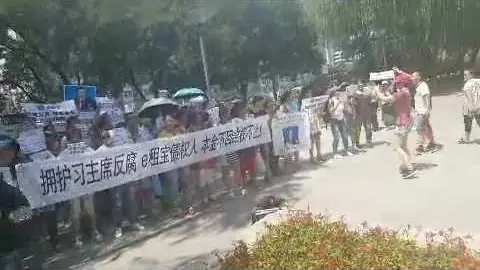
4. Ezubao investors carry a banner reading 'Support Chairman Xi's anti-corruption drive; Ezubao is killing people' at a petitioning protest in Beijing
8 August 2016 · Beijing, China
With about 900,000 savers unable to get their money back, investors protested outside government offices in several cities through 2016. Petitioners were often detained; this footage was filmed by a participant.
▶ Watch the video · Investor footage, 9 August 2016
Video still: uploaded by an Ezubao investor, via YouTube · YouTube, '2016年8月8号与E租宝北京维权' (Ezubao rights-defence, Beijing, 8 August 2016), uploaded 9 August 2016
Beijing High People's Court upholds the verdicts on appeal: life for Ding Ning and Ding Dian, 3 to 15 years for Zhang Min and 23 others▶ WATCH
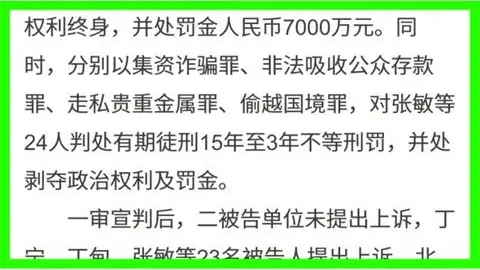
5. Beijing High People's Court upholds the verdicts on appeal: life for Ding Ning and Ding Dian, 3 to 15 years for Zhang Min and 23 others
29 November 2017 (first-instance verdict 12 September 2017) · Beijing High People's Court, China
The Beijing No. 1 Intermediate People's Court sentenced Ding Ning on 12 September 2017 to life and a 100 million yuan fine for fund-raising fraud, illegal gun possession and smuggling precious metals; his brother Ding Dian got life. The appeal court affirmed everything in November 2017.
▶ Watch the video · Uploaded 29 November 2017
Video still: court announcement text via YouTube · YouTube, '“e租宝”案二审维持原判 主犯被判无期' (Ezubao appeal upholds verdict), uploaded 29 November 2017, showing the court's announcement
Operations
Where they were physically based, what they did in each place and when, and the methods they used. Tap a country or a method for its page.
THE MAP
Born in amber; operated from cyan. Tap a marker for the country page.
🇨🇳 China — born here
METHODS IN THIS CASE: #4 Ponzi Scheme — New deposits paid old investors · #17 Investment Scam (General) — Fake loan listings on Ezubao
WHAT THEY DID HERE: July 2014–Dec 2015 — Runs Ezubao from Yucheng Group; fake leasing projects raise ¥50B+ from ~900,000 investors. · Jan 2016 — Arrested; sentenced to life in Sept 2017.
OPERATED FROM
Where they were physically based or worked. Tap a country for its page.
🇨🇳 Anhui province and Beijing, China ▸
July 2014–Dec 2015Runs Ezubao from Yucheng Group; fake leasing projects raise ¥50B+ from ~900,000 investors.SOURCE: Beijing No.1 Intermediate People's Court, Sept 2017
Jan 2016Arrested; sentenced to life in Sept 2017.SOURCE: Xinhua
METHODS USED
Tap a method to see where it came from and everyone who used it.
Ponzi SchemeNew deposits paid old investors ▸Investment Scam (General)Fake loan listings on Ezubao ▸
Sources
SOURCES
[1] PRIMARY — Xinhua / People’s Daily: Ezubao investigation (Feb 1, 2016)
[2] PRIMARY — Xinhua / China Daily: Beijing verdict (Sept 12, 2017)
[3] SECONDARY — CBS / Reuters: collapse and gifts
[4] AGGREGATOR — Wikipedia: Ezubao
More
KEY FACTS
DING NING
THE NINE HUNDRED THOUSAND · 丁宁 · EZUBAO · CASE 031 · PONZI · LIFE IMPRISONMENT 2017
RAISED
59.8B yuan (~$9B) · officially reported
UNPAID
~38B yuan (~$5.8B)
INVESTORS
~900,000
FAKE PROJECTS
~95% (prosecutors)
SENTENCE
Life · Sept 12, 2017
FINE
100 million yuan
OFFICIAL FIGURES: all numbers come from Chinese prosecutors, courts and state media. Yuan converted at 2015–16 rates (~6.5 per dollar).
BY NUMBER OF VICTIMS
MADOFF (004)
~37,000 investors
STANFORD (010)
~18,000 CD holders
EZUBAO (031)
~900,000 investors, officially reported
ONECOIN (008)
Millions claimed; disputed
HOW IT WORKED

HOW EZUBAO WORKED — DEFENSIVE LEVEL

01
The shop window: An online marketplace listing companies that wanted loans
02
The listings: About 95% were fake, prosecutors said
03
The returns: Paid out of new deposits, not real interest
04
The spending: Gifts, property and luxury goods for insiders
05
The warning sign: High fixed returns and listings you can’t check independently
HOW THE MONEY MOVED
Savers’ deposits
-->
Fake loan listings
-->
Old investors paid
-->
Insiders’ spending

WHAT THIS CASE ESTABLISHED

By the official count, one of the largest Ponzi schemes ever by number of victims.
A whole industry was shut down after it.
Series link: Case 004 (Madoff) and Case 010 (Stanford) — the Ponzi pattern at three scales.
🏠 HOME📁 CASES🚨 WANTED🎮 PLAY🌍 WORLD