Alex Mashinsky
TAP TO READ FULL NARRATIVE — UNBANK YOURSELF (1,300 WORDS)
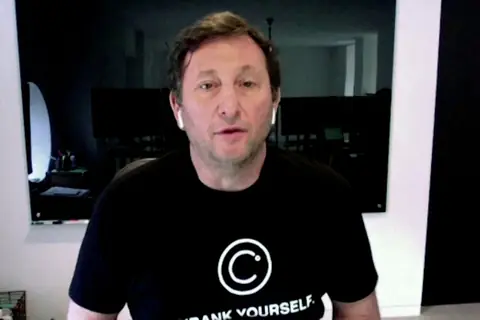
The slogan was 'Unbank Yourself.'
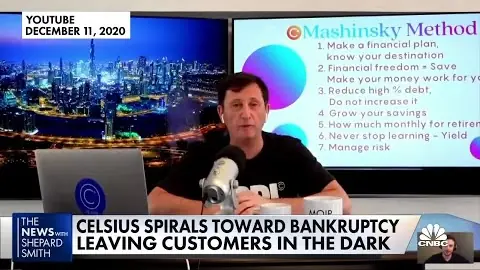
Celsius Network, the cryptocurrency yield platform founded and led by Alex Mashinsky, built its brand on the proposition that it was better than a traditional bank. It paid higher interest — 5 to 20 percent annually on deposited crypto, depending on the asset and the tier. It did not require credit checks. It was available globally. And it was, according to Mashinsky in his weekly 'Ask Mashinsky Anything' livestreams, safe.
'Celsius does not do non-collateralized loans,' he told customers in those livestreams. 'That would be taking too much risk on your behalf.' [SOURCE: Reuters / guilty plea record]
It was false. Celsius did make non-collateralized loans. It made risky, undisclosed bets in decentralized finance protocols. When those bets turned against it in the crypto market collapse of 2022, the hole in the balance sheet was approximately $1.2 billion. The company froze customer withdrawals on June 12, 2022 — trapping approximately $4.7 billion in customer assets. It filed for bankruptcy on July 13, 2022.
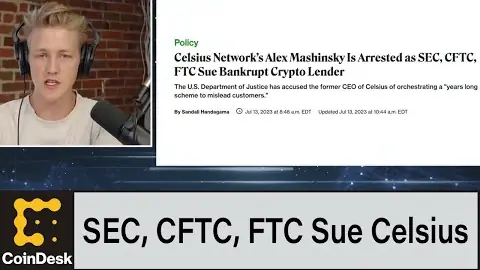
Mashinsky was arrested on July 13, 2023, exactly one year after the bankruptcy filing. He pleaded guilty on December 3, 2024, to two counts: commodities fraud and a scheme to manipulate the price of Celsius's native CEL token. He was sentenced to 12 years in federal prison on May 8, 2025, by US District Judge John G. Koeltl in Manhattan's Southern District of New York. [SOURCE: NBC Washington; Yahoo Finance; DOJ]
Alexander Mashinsky was born in October 1965 in the Soviet Union (the Ukrainian SSR); his family emigrated in the 1970s and he grew up in Israel. He is a serial entrepreneur who moved to the United States and built a career in technology. He claims to have invented Voice over Internet Protocol (VoIP) — a claim that is disputed but that he deployed as a credential for the Celsius brand.
Celsius Network was founded in 2017. The model was crypto lending: customers deposited Bitcoin, Ethereum, stablecoins, and other digital assets with Celsius. Celsius paid them interest — returns substantially higher than any conventional bank was offering. The interest was funded by Celsius lending those assets out to institutional borrowers and deploying them in DeFi protocols.
At its peak in late 2021, Celsius purportedly held approximately $25 billion in assets, according to the DOJ and was one of the largest crypto yield platforms in the world. It had approximately 1.7 million customers. The customer base was heavily retail — ordinary individuals who had deposited life savings, retirement funds, and emergency reserves in what Mashinsky had repeatedly told them was a safe, conservative, regulated alternative to traditional banking.
The reality, per the DOJ's charges and Mashinsky's own guilty plea: Celsius was taking risks it never disclosed. It made uncollateralized loans — which Mashinsky had specifically denied on livestream. It deployed customer assets into highly volatile DeFi protocols. The risks were not disclosed to customers in a way that would have allowed them to make informed decisions.
The CEL token was Celsius's native cryptocurrency — its own coin, with a specific function within the platform: customers could receive higher interest rates if they held CEL, and Celsius used it as part of its yield payment structure. CEL's price mattered to Celsius's business model and to its appearance of solvency.
Mashinsky's specific plea covers what he admitted doing to the CEL token: he directed Celsius to purchase CEL in the open market to prop up its price — using customer funds to create artificial demand for a token that was also a significant part of his personal wealth. While doing this, he was personally selling his own CEL holdings. [SOURCE: DOJ; guilty plea record]
At sentencing, the court heard that Mashinsky made more than $48 million from selling CEL at inflated prices he had helped create. [SOURCE: Fortune / Yahoo Finance / NBC Washington] While he was telling customers on livestreams that he was not selling his CEL tokens, he was selling his CEL tokens.
In court in December 2024, Mashinsky stated: 'I said that Celsius had approval from regulators. It was false. I falsely said I was not selling my CEL tokens. I accept full responsibility for my actions. I did not know which law it was violating, but I knew it was wrong — and illegal.' [SOURCE: Inner City Press / Reuters, December 2024]
The crypto market began its major decline in May 2022. The collapse of TerraLUNA (Case 003 in this series) triggered a liquidity crisis across the sector. Celsius's positions — heavily concentrated in illiquid DeFi protocols that were themselves collapsing — created a hole in the balance sheet that the company could not cover.
On June 12, 2022, Celsius halted all withdrawals, swaps, and transfers. The platform froze. Approximately 1.7 million customers could not access their funds. The announcement cited 'extreme market conditions' — language that revealed nothing about the underlying insolvency.
The bankruptcy filing came on July 13, 2022. The $1.2 billion gap in the balance sheet became public. Customers who had deposited in good faith — retirees, families, individuals who had moved their life savings onto the platform — were now unsecured creditors in a bankruptcy proceeding.
More than 200 victim impact statements were submitted at sentencing. The judge acknowledged reports of suicides connected to the collapse. [SOURCE: Fortune; DOJ press statement at sentencing] These are the human consequences of the gap between 'safer than a bank' and the reality of what the platform was doing with deposited assets.
DOJ sought 20 years. His lawyers sought 1 year and 1 day. Probation recommended 15 years. Judge Koeltl imposed 12. [SOURCE: The Block; NBC Washington; Yahoo Finance]
Judge Koeltl described the crimes as 'extremely serious' and said a substantial sentence was needed because some customers lost everything and suffered severe psychological harm (as reported by AP). The 12-year sentence for Mashinsky sits between Ellison's 2 years (full cooperation, no personal theft) and SBF's 25 years (direct misappropriation of $8B, zero cooperation). The DOJ characterized the $4.7B FTC settlement with Celsius as one of the largest in the FTC's history.
The co-defendant Roni Cohen-Pavon, Celsius's former Chief Revenue Officer, pleaded guilty in September 2023 and cooperated. On 14 May 2026 Judge Koeltl sentenced him to time served, a $40,000 fine and forfeiture of over $1 million.
The Mashinsky case closes the crypto yield platform category. Every major platform of this type that was prominent in 2021 has now produced a criminal case: FTX (Case 005), Celsius (Case 028), Binance/CZ (Case 015). The model was the same — take depositor funds, promise yield, deploy in risky strategies — and the regulation that would have required disclosure of those risks was what each platform had spent years trying to avoid.
IDENTITY
CASE RECORD
 ▶ WATCH
 ▶ WATCH
 ▶ WATCH
 ▶ WATCH