Stanislav Moiseyev
TAP TO READ FULL NARRATIVE — THE STORE (1,300 WORDS)
Silk Road (Case 013) launched in 2011, was shut down in 2013, and its operator Ross Ulbricht received two consecutive life sentences — then was pardoned by President Trump in January 2025. The prosecution of Silk Road established the legal framework for darknet-market enforcement in the United States. The platform itself had processed approximately $200 million in revenue before it was taken down.
Hydra processed more than $5.2 billion. [SOURCE: US DOJ]
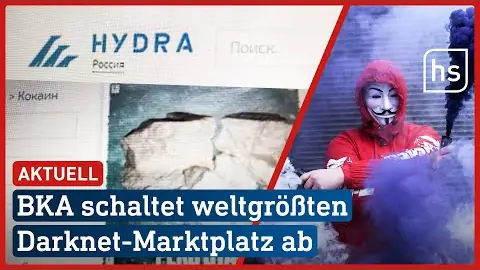
Silk Road was the original. Hydra was what the model became after a decade of iteration — larger, better organised, more deeply embedded in the Russian-language market, and in operation for seven years before it was taken down. By the time German authorities seized its servers on April 5, 2022, Hydra had some 17 million customer accounts and had handled an estimated 80 percent of all darknet-related cryptocurrency transactions worldwide in 2021. [SOURCE: US DOJ, April 2022; Chainalysis]
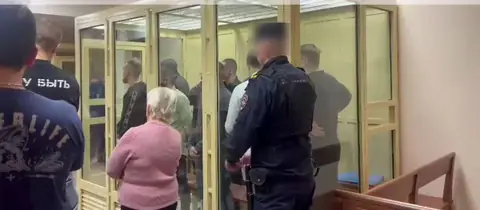
Stanislav Moiseyev, identified as the founder and organiser of the operation, was convicted by the Moscow Regional Court on December 2, 2024 and sentenced to life imprisonment. Fifteen accomplices received sentences ranging from 8 to 23 years. [SOURCE: TASS / Interfax as reported by Cointelegraph / BankInfoSecurity]
Two governments came for Hydra: Germany seized the infrastructure; Russia convicted the operator. The marketplace was treated as a serious crime on both sides of the jurisdictional divide.
Hydra Market founded approximately 2015, was a Russian-language darknet marketplace. The core business was illegal drugs — its vendors supplied narcotics to buyers across Russia and Belarus using a dead-drop model, where purchased items were left at predetermined locations rather than mailed. [SOURCE: Moscow Regional Court per TASS; BankInfoSecurity]
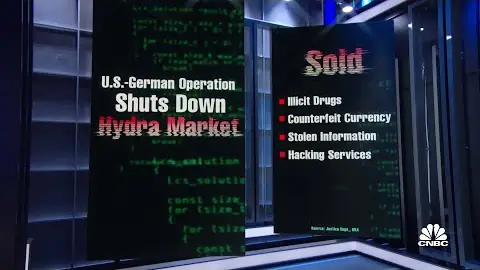
What made Hydra distinctive was not the business model — which was the same escrow-and-rating structure that Silk Road had established — but the scale of its integration into the Russian-speaking market and the sophistication of its financial services layer. Beyond drug sales, Hydra offered ransomware-as-a-service, hacking tools, stolen payment card data, counterfeit currency, and fake identity documents. It also operated as a cryptocurrency mixer — a service to obscure the origin of cryptocurrency transactions. [SOURCE: DOJ; BankInfoSecurity; Wikipedia]
The cryptocurrency volume reflects both the marketplace's size and its mixing function: much of the $5.2 billion figure represents money flowing through Hydra for obscuring purposes, not only for direct purchases on the market. This distinction matters: $5.2 billion is the total assessed flow, not the total value of goods sold.
Hydra's drug-supply chain operated through a network of vendors, clandestine production facilities, and storage sites hidden in vehicles, garages, and homes with secret compartments — per the Russian prosecution's account. The scale of the physical operation was documented when authorities seized approximately one tonne of illegal narcotics during raids. [SOURCE: Moscow Regional Court per TASS; BankInfoSecurity]
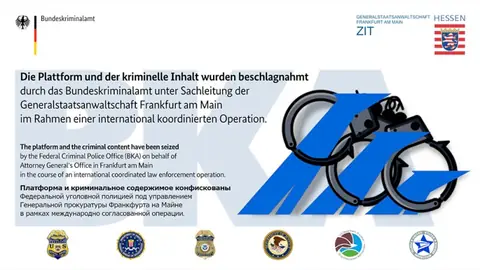
On April 5, 2022, the German Federal Criminal Police Office (BKA), working with US Department of Justice and Treasury counterparts, announced the seizure of Hydra's Germany-based servers and the confiscation of cryptocurrency. The US Treasury's OFAC simultaneously sanctioned Hydra, cutting it off from the US financial system and any institutions with US connections. [SOURCE: DOJ announcement April 5, 2022; US Treasury]
The cryptocurrency seized in the operation amounted to approximately $25 million — the assets directly accessible on the seized infrastructure. This is the seizure figure. It is separate from the $5.2 billion in revenue the marketplace had processed over its lifetime; the vast majority of that revenue had long since been distributed or moved.
The servers were located in Germany — which explains the German-led jurisdiction. The choice of Germany for hosting was presumably not accidental; Hydra's operators sought hosting infrastructure with limited visibility to Russian authorities, though the eventual Russian prosecution of Moiseyev suggests that calculation did not hold.
The DOJ's parallel action designated Hydra as a significant transnational criminal organisation and charged Dmitry Olegovich Pavlov, a Russian national, with conspiring to run Hydra's servers through his hosting company, Promservice. [SOURCE: DOJ April 5, 2022]
The Moscow Regional Court convicted Stanislav Moiseyev and 15 co-defendants on December 2, 2024. The charges: organising a criminal community and the illegal production and distribution of psychotropic substances and drugs — the Russian criminal code's framing of what the marketplace had enabled. [SOURCE: TASS / Interfax as reported; Cointelegraph; BankInfoSecurity]
The life sentence was imposed by a judge, with a fine of 4 million rubles (approximately $38,000). His accomplices received sentences of 8 to 23 years and collective fines of 16 million rubles. Moiseyev's life term is served in a special-regime colony, the strictest in the Russian system; his accomplices were sent to special- and strict-regime colonies. It was the first life sentence in Russia for a crime of this kind, according to Russian media.
The Russian conviction is independent of and parallel to the US and German actions. The Russian state prosecuted Moiseyev not under US law but under Russian criminal code, for harm done to Russia — the narcotics supplied within Russia and Belarus. The international dimension (the German server seizure, the US sanctions) provided the backdrop, but the prosecution was a domestic Russian action.
During the investigation, Moiseyev refused to disclose the password to his confiscated cryptocurrency wallet. [SOURCE: Forklog citing Interfax] The value of that wallet is not established in public reporting — it represents an unknown quantity of digital assets beyond the reach of the court's confiscation orders.
The conviction is being appealed by the defence. [SOURCE: Bitdefender citing reports] The life sentence stands pending appeal.
The Silk Road case is often framed as the founding and closing of the darknet marketplace model. The Hydra case is why that framing is wrong.
The model did not close when Ulbricht was convicted in 2015. It migrated — to other platforms, other jurisdictions, other languages. Hydra was not a successor that respected the boundaries of the original; it operated at a completely different scale in a completely different market. The Russian-language darknet economy that Hydra dominated was largely invisible to Western coverage until the April 2022 takedown made it visible.
Since Hydra's closure, per Chainalysis reporting, new Russian-language darknet markets have emerged and grown. Darknet markets generated $1.7 billion in revenue in 2023, surpassing 2022 levels even in Hydra's absence. The closure of the dominant platform created a fragmented market of successor operations, and a 'Russian darknet market conflict' among those successors. [SOURCE: Chainalysis / cryptometer.io citing Chainalysis]
The marketplace was never the crime scene. It was the infrastructure — the store, not the supply chain, not the cash-out. Moiseyev built the store and ran the community. The vendors, the producers, the customers, the money mixers: a much wider ecosystem fed through the same platform. A life sentence for the infrastructure operator does not close the supply chain.
IDENTITY
CASE RECORD
WHAT THIS CASE ESTABLISHED
 ▶ WATCH
 ▶ WATCH
 ▶ WATCH