Elizabeth Holmes
TAP TO READ FULL NARRATIVE — THE MIRAGE (3,500 WORDS)
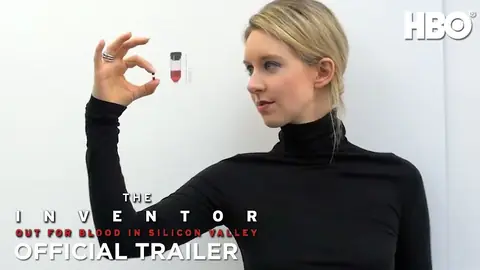
The promise of Theranos was this: one drop of blood from a finger prick, placed on a small proprietary device called the Edison, could run hundreds of medical tests. Quickly, cheaply, accurately. Without a needle, without a lab, without the friction of traditional diagnostics.
The promise was beautiful in the way that the best Silicon Valley pitches are beautiful — it identified a real problem (blood draws are unpleasant and expensive), proposed an elegant solution (a device that did more with less), and positioned the person making it as the visionary who had seen what others had missed.
The promise was also, a federal jury in San Jose decided in January 2022, a fraud.
The Ninth Circuit Court of Appeals, affirming the conviction in February 2025, called the promise of Theranos's technology a 'mirage.' It described Elizabeth Holmes's statements and those of her partner Ramesh Balwani as 'half-truths and outright lies.' [SOURCE: Bay City News / Fox4, citing Ninth Circuit opinion, February 24, 2025]
She built a company on a story. The story was the product. And when the story was told to investors who wrote checks, she was convicted. When it was told to patients who got blood tests, the jury acquitted. That distinction — the jury's split — is the moral puzzle at the centre of Case 007, and it belongs at the beginning.
Elizabeth Anne Holmes was born on February 3, 1984, in Washington D.C.
Her family background was comfortable and connected — her father worked for government and later in business, her mother for Congress. She attended St. John's School in Houston, where by her own account she decided as a teenager that she would be a billionaire. [SOURCE: widely documented in press coverage] She told her father that she wanted to give him a birthday present he couldn't afford to buy himself, which he interpreted as affection and she may have meant literally.
She enrolled at Stanford University in 2002 to study chemical engineering. She was 18. By the following year, at 19, she had dropped out to found Theranos.
The Stanford credential — present even in its absence, perhaps especially in its absence — would carry forward in the Theranos story. She had been accepted to Stanford. She had studied there. She had left because she had something better to do. In Silicon Valley, dropping out to start a company is not failure. It is the specific sequence of actions that produced Gates, Dell, Zuckerberg. It is a credential of its own.
She was 19 years old when she founded Theranos. She was 37 when she was convicted.
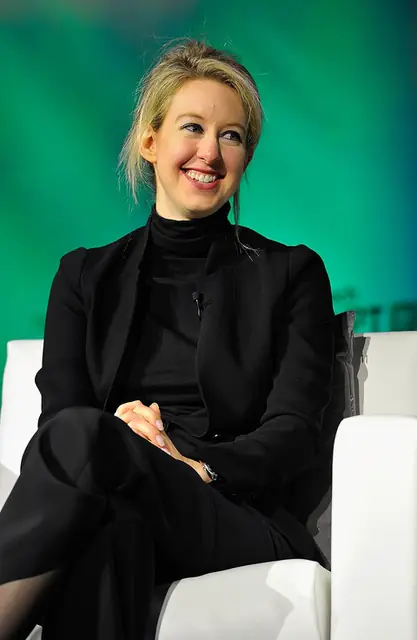
The black turtleneck was Steve Jobs's. It was his uniform — the same garment, worn every day, a statement that the mind had better things to occupy itself with than deciding what to wear. Elizabeth Holmes adopted it.
She also adopted — or developed, or cultivated — a voice. Her natural speaking voice, by those who knew her before Theranos became famous, was described as higher and more ordinary. The voice that appeared on magazine covers and TED stages and in board meetings with Henry Kissinger and George Shultz was deep, deliberate, and authoritative. Whether this was a performance or had become simply how she spoke is something that only she knows.
The Jobs comparison was not incidental. Magazines applied it. Interviewers applied it. The comparison served a function: it placed her in a lineage, attached her story to a known narrative of visionary founders who saw differently from everyone else and were proven right. If she was the next Jobs, then the people who doubted the technology were the equivalent of the people who doubted the first Mac. Doubt became a risk of being wrong rather than a form of due diligence.
She appeared on the cover of Fortune in 2014 under the headline 'This CEO Is Out For Blood.' She appeared in Forbes, Time, Inc. By 2015, at 31, she was on the Forbes 400 with an estimated net worth of $4.5 billion — all of it on paper, all of it contingent on the company's valuation being real. She was, the magazine said, the youngest self-made female billionaire in history.
The board of Theranos included Henry Kissinger, George Shultz, James Mattis, and William Perry. Not scientists. Not medical diagnostics professionals. Statesmen, generals, men of institutional authority whose presence on a board implied that the enterprise had been examined and found worthy. The board was, in its composition, a form of the argument: serious people are involved, serious people have looked at this.
The persona and the board were parts of the same machine. The story was being told in every dimension simultaneously — the appearance, the voice, the lineage, the backers, the magazine profiles. The technology didn't need to be proven if everything else about the frame said it already was.
Ramesh Balwani, known as Sunny, was President and Chief Operating Officer of Theranos. He and Elizabeth Holmes were in a romantic relationship for years during the period the fraud occurred.
Balwani was 19 years older than Holmes. He had made money in software during the dot-com era and joined Theranos in 2009. At the company, he managed the laboratory operations and the customer-facing testing business — the part of the operation where patients actually received blood tests and results.
The court severed their cases — a procedural decision that meant they were tried separately, before different juries, at different times. [SOURCE: case record, 5:18-cr-00258-EJD] The consequence of severance was significant: their accounts could not be cross-examined against each other in the same proceeding. What Holmes said about Balwani's role, and what Balwani said about Holmes's, were not tested against each other in real time.
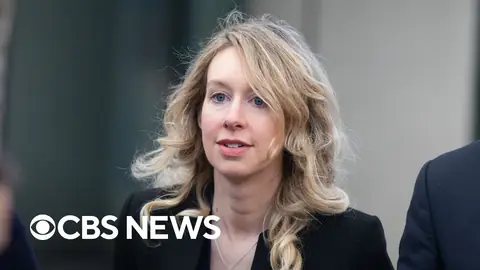
Holmes was tried first. She was convicted in January 2022 on four counts: three counts of wire fraud against investors and one count of conspiracy with Balwani to defraud investors. She was acquitted on the counts relating to patients.
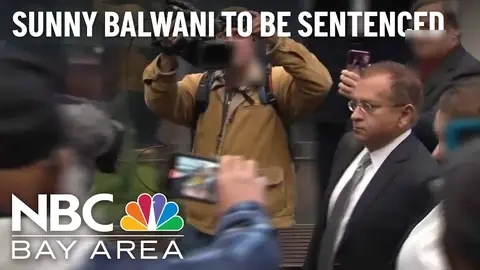
Balwani was tried separately and convicted in July 2022 on all twelve counts he faced — including the patient-related counts that Holmes had been acquitted on. [SOURCE: DOJ / N.D. Cal.] The jury that evaluated his conduct regarding patients reached a different conclusion than the jury that evaluated Holmes's. He was sentenced in December 2022 to 13 years in federal prison. [SOURCE: Fox4/KTVU confirming 13 years]
The Edison was the name of the Theranos device — a proprietary blood-testing machine that was supposed to do what the company claimed: run a comprehensive menu of tests from a single drop of blood obtained by finger prick.
What the company told investors, per the court record: the Edison could perform this analysis accurately and reliably across hundreds of tests. The technology was working. The results were trustworthy. The product was ready.
What was actually happening, per the evidence at trial: the Edison could not reliably run the full claimed menu of tests. Many tests were being run on commercial third-party laboratory machines — the kind made by Siemens and other established manufacturers — rather than on the proprietary Edison device. [SOURCE: trial record / DOJ] Theranos had publicly disparaged such machines as inferior to its own technology. It was using them instead.
Some patient test results were inaccurate. The lab's final director, Dr. Kenneth Das, ultimately ordered all tests run on the Edison machines to be voided — a decision that was later cited in the appeals proceedings. [SOURCE: Courthouse News / Bay City News, citing Ninth Circuit opinion]
Investors were shown demonstrations and financial projections that did not reflect the operational reality. The technology was described as finished and proven when, by the evidence presented at trial, it was neither.
The core lie, stated plainly as the court record allows: the product that investors were paying for did not work the way they were told it worked. The promise was what they were buying. The promise was the mirage.
In October 2015, John Carreyrou of the Wall Street Journal published a story.
The headline: 'Hot Startup Theranos Has Struggled With Its Blood-Test Technology.' The story was based on interviews with former Theranos employees — people who had left the company and were willing, with some protection, to describe what they had seen inside.
What they described: that the Edison device was not performing as Theranos claimed. That many tests were being run on conventional laboratory equipment. That the results had accuracy problems. That the reality inside the company was considerably different from the story being told outside it.
Theranos and Holmes fought the story aggressively. Her lawyers sent cease-and-desist letters. The company held a press conference. Holmes went on television and called the reporting 'factually inaccurate' and 'misleading.' She told journalists that the story had been written by someone who did not understand the technology.
The story was accurate. Carreyrou continued reporting. He eventually published the book Bad Blood: Secrets and Lies in a Silicon Valley Startup, which became the definitive account of what had happened inside the company. The book came out in 2018 — the same year Holmes and Balwani were indicted.
The WSJ exposé is the origin point of the legal proceedings. Without Carreyrou's reporting, the fraud might have continued until it collapsed on its own. With it, the regulatory scrutiny that followed led to the evidence that led to the indictments. Journalism is in the chain of causation for this case in a way it usually is not.
The Theranos investor list was not a list of naive people who had been tricked by a slick presentation. It was a list of some of the wealthiest and most connected individuals and families in the United States.
Rupert Murdoch invested approximately $125 million in Theranos — later writing it down to zero. [SOURCE: widely reported; verify exact figure against primary before publication] The DeVos family, the Walton family, the Cox family — among the investors who collectively put in what the government characterised as approximately $945 million. [SOURCE: DOJ — verify against primary before final publication]
These were not people who failed to do due diligence because they lacked access to experts. They were people who had been told, by a founder with a Stanford pedigree and a board of statesmen, a compelling story about a transformative technology — and who chose to believe it. Some of them may not have asked the questions that would have revealed the problem, in part because the frame Holmes had constructed made asking those questions feel like missing the point.
This is a pattern visible across the series. Madoff's victims were sophisticated investors who could have investigated the returns and chose not to, partly because the returns looked like exactly what a Madoff investment should look like. Bankman-Fried's backers were institutional funds that did due diligence and concluded the effective altruism framing made the risk worth taking. Holmes's investors had a board of Kissinger and Shultz and Mattis telling them, implicitly, that serious people had looked at this.
The company was valued at approximately $9 billion at its peak. That valuation — the figure that made Holmes a billionaire on paper — is not the amount investors lost. The lost figure is the actual capital invested, approximately $945 million per the government's case. The gap between those two numbers is the gap between valuation and reality, and it is the same gap that appears in every case in this series.
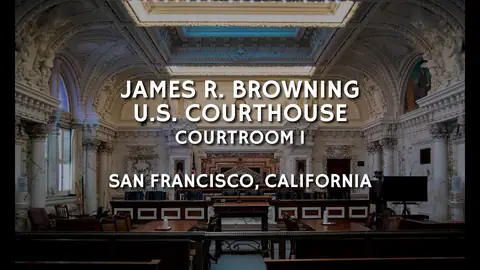
Holmes's trial ran for four months in San Jose, California, before Judge Edward J. Davila. It was one of the most closely watched corporate fraud trials in recent memory.
The prosecution presented evidence that the Edison device could not reliably run the tests Theranos claimed it could, that many results had been generated on conventional laboratory equipment rather than the proprietary machine, that investor presentations had contained projections and representations that did not match the company's actual capabilities.
Holmes testified in her own defense over eight days. She told the jury that she had genuinely believed in the technology. She said she had been the victim of Balwani's abuse — domestic abuse claims that her legal team presented as part of the defense, arguing that his control over her limited her awareness of what was actually happening inside the company. [SOURCE: widely documented; trial record]
The jury deliberated and returned its verdict on January 3, 2022.
On three counts of wire fraud against investors and one count of conspiracy to defraud investors: GUILTY.
On the counts related to patients: NOT GUILTY.
The split is the most important legal fact in the case and the most important moral fact. The jury decided that she had defrauded the people who gave her money. It decided it could not say, beyond a reasonable doubt, that she had defrauded the people who got blood tests. Whether that distinction reflects the evidence, the difficulty of proving patient harm in a case this complex, or something else — that is a question the verdict leaves open.
Balwani's jury, evaluating his conduct separately eight months later, came to a different conclusion about the patient counts and convicted him on all twelve charges.
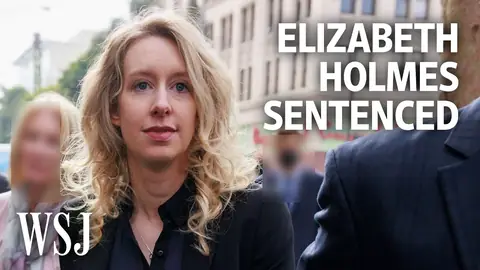
On November 18, 2022, Judge Edward J. Davila sentenced Elizabeth Holmes to 135 months in federal prison — 11 years and 3 months.
The sentence was below what prosecutors had sought and above what her lawyers had argued for. Davila acknowledged the genuine belief Holmes may have had in the technology, but found that the evidence of fraud was sufficient to warrant a substantial sentence. [SOURCE: Reuters / CNN Business, November 18, 2022]
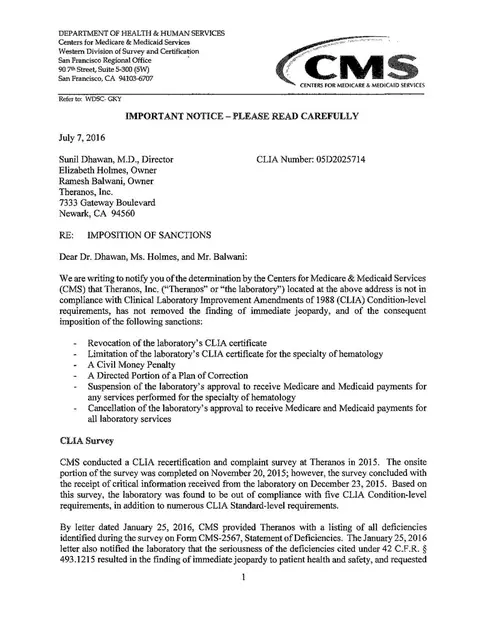
Holmes was ordered to surrender to prison in April 2023. Her lawyers sought to delay while the appeal was pending. The Ninth Circuit denied the stay in May 2023, finding she had not raised a 'substantial question' that her conviction would be overturned. [SOURCE: UPI, May 2023] Judge Davila ruled she must report by May 30, 2023.
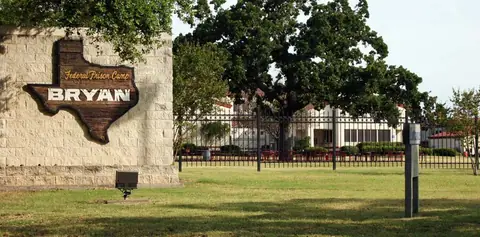
She reported to the Federal Prison Camp in Bryan, Texas — a minimum security facility. In a People Magazine interview, she described prison as 'hell and torture.' [SOURCE: Fox4 citing People Magazine] She is currently serving her sentence there.
Balwani was sentenced in December 2022 to 13 years — a longer sentence than Holmes, reflecting his additional convictions on the patient-related counts. [SOURCE: Fox4/KTVU confirming 13 years]
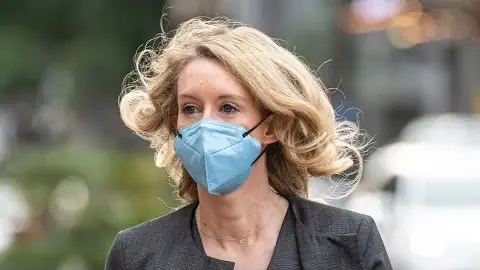
On February 24, 2025, a three-judge panel of the Ninth Circuit Court of Appeals unanimously affirmed Holmes's conviction and sentence.
The 54-page opinion, written by Judge Jacqueline Nguyen, rejected every argument Holmes's lawyers had raised. Two grounds of appeal had received the most attention: that the trial judge had improperly allowed Theranos's final lab director, Dr. Kenneth Das, to testify as a fact witness on matters that required him to be qualified as an expert; and that a government regulatory report had been improperly admitted and may have misled the jury. [SOURCE: Fox4/KTVU; Courthouse News; Bloomberg Law]
The Ninth Circuit found that even if the trial judge had committed procedural errors in these rulings, those errors were harmless — the other evidence against Holmes was so substantial that no different result would have been likely. [SOURCE: Bloomberg Law citing opinion, February 2025]
The court's characterisation of the fraud was the most significant element of the opinion for the series record: the promise of Theranos's technology was a 'mirage,' and Holmes's statements were 'half-truths and outright lies.' [SOURCE: Bay City News / Fox4, citing Ninth Circuit panel opinion]
Holmes requested a rehearing in April 2025, arguing that the harmless error analysis was wrong and that the panel had made factual mistakes in its opinion. On May 8, 2025, the Ninth Circuit denied the rehearing — both the panel rehearing and the en banc hearing request — unanimously. No judge of the court requested a vote on whether to rehear the matter. [SOURCE: Bloomberg Law, May 8, 2025; Courthouse News, May 2025]
The only remaining legal option is a petition to the United States Supreme Court for certiorari. The court grants fewer than 1% of such petitions in criminal cases. Holmes's conviction is, for all practical purposes, final.
The series thesis for Case 007 is this: she built a company on a story, and the story was the product.
The other cases in this series document specific kinds of deception. Hushpuppi deceived about the source of his money. Malone Lam deceived about his right to the Bitcoin he had stolen. Do Kwon deceived about what an algorithm had done. Madoff deceived about whether investments had occurred. Bankman-Fried deceived about the separation between his exchange and his trading firm.
Holmes deceived about what a machine could do. But more specifically, more relevantly: she deceived about whether the story she was telling about the machine was true. The story — revolutionary technology, democratised diagnostics, the next Jobs building the next Apple — was so compelling, so coherent, so well-constructed and so well-delivered that it substituted for the evidence that would have tested it.
Silicon Valley has a specific vulnerability to this kind of fraud. The culture privileges the founder's vision over conventional verification. Due diligence can feel like you are the person who told Jobs that a graphical interface was unnecessary. The board of statesmen was not assembled because they understood medical diagnostics. It was assembled because their presence implied that serious people had examined the claim and found it credible.
They had not. Or not sufficiently. Or the story was simply better than the questions it generated.
John Carreyrou did what the board had not done: he talked to people who had actually worked inside the company and reported what they said. The story he published in 2015 was not the product of technical expertise. It was the product of the journalist's oldest tool — talking to people who were there. The technology that could run hundreds of tests from a single drop of blood could not withstand that.
The jury decided she defrauded investors. It could not agree she defrauded patients. Balwani's jury convicted him on the patient counts. The moral question — did the patients who received inaccurate tests from a technology that did not work as described suffer a wrong? — is not resolved by either verdict. It sits in the gap between them, as it will continue to sit.
IDENTITY
CASE RECORD
WHAT THIS CASE ESTABLISHED
 ▶ WATCH
 ▶ WATCH
 ▶ WATCH
 ▶ WATCH
 ▶ WATCH
 ▶ WATCH
 ▶ WATCH
 ▶ WATCH
 ▶ WATCH
 ▶ WATCH
THE MECHANISM — THE STORY AS PRODUCT
WHAT TWO JURIES DECIDED
The split is the case’s moral puzzle. The jury decided she defrauded the people who gave her money. It could not say, beyond a reasonable doubt, that she defrauded the people who got blood tests. Balwani’s jury reached the opposite conclusion on that question. The patients who received inaccurate tests from a technology that did not work as described — whether they suffered a wrong is a question neither verdict resolves. It sits in the gap between them. [SOURCE: trial records · NBC News verdict coverage]
KNOWN INVESTOR FIGURES — FROM UNSEALED COURT DOCUMENTS
CONVICTION AFFIRMED — APPEAL DENIED
54-page opinion by Judge Jacqueline Nguyen for the unanimous three-judge panel. Two appeal grounds received most attention: improper fact-witness testimony by Dr. Kenneth Das (Theranos’s final lab director); and improper admission of a government regulatory report. Both were found harmless given the weight of other evidence. En banc rehearing denied May 8, 2025 — no judge requested a vote. Certiorari to the Supreme Court is the only remaining option (granted in fewer than 1% of criminal cases). [SOURCE: Bloomberg Law · Courthouse News · Fox4/KTVU]