Marcelo Odebrecht
TAP TO READ FULL NARRATIVE — THE DEPARTMENT (1,100 WORDS)
Most companies have a legal department, a finance department, a human resources department. Odebrecht — Marcelo Odebrecht's construction conglomerate, the largest in Latin America — had one more: the Division of Structured Operations.
The Division of Structured Operations (Divisão de Operações Estruturadas) was, per the US DOJ's description in its 2016 charging documents, a bribery unit — a department with its own off-book accounting system, dedicated to routing payments to government officials across the region in exchange for public infrastructure contracts. It was staffed, budgeted, and audited. Its output was corruption, paid in cash and tracked in records.
The records are why the case is continental. When the Brazilian investigation Operation Car Wash (Lava Jato) reached Odebrecht's cooperation agreement in 2016, the Division's records provided evidence against officials in approximately 12 countries: Brazil, Peru, Ecuador, Mexico, Panama, Venezuela, Argentina, Colombia, the Dominican Republic, Guatemala, Mozambique, Angola, and others. Presidents, ministers, and party treasurers across the hemisphere were implicated by a single company's expense account.
Marcelo Odebrecht, born in 1968, was CEO of the company from 2008 to 2015. He was arrested in Brazil in 2015. He was convicted in 2016 and sentenced to 19 years and 4 months. He cooperated with investigators under a leniency agreement. And in May 2024, Brazil's Supreme Federal Court annulled the criminal proceedings — while leaving the cooperation agreement intact.
The bribe was the input. The contract was the output.
Odebrecht built its Latin American dominance through public infrastructure contracts — roads, dams, oil facilities, ports. The contracts were awarded by governments. The governments were controlled by officials. The officials could be paid.
The Division of Structured Operations managed those payments through a dedicated off-book accounting system — a shadow ledger that tracked bribes by official, by project, and by country. The amounts were substantial. The records were meticulous. The process was routine.
The DOJ's 2016 leniency agreement with Odebrecht and its petrochemical subsidiary Braskem documented approximately $788 million in bribes paid across the scheme's operational period — from approximately 2001 through 2016. This is the bribe total: the amount paid to officials to obtain contracts. It is not the contract value (which was far larger) and it is not a loss figure in the conventional sense. The bribes were an input cost, and the contracts were the return on investment.
The scale made Operation Car Wash, the Brazilian anti-corruption investigation that ultimately reached Odebrecht, one of the largest corruption investigations in history. The cooperation agreement Odebrecht signed with Brazilian, US, and Swiss authorities was, at the time, one of the largest corporate corruption settlements ever — with total penalties reported at approximately $3.5 billion across jurisdictions. [SOURCE: DOJ 2016; verify exact total]
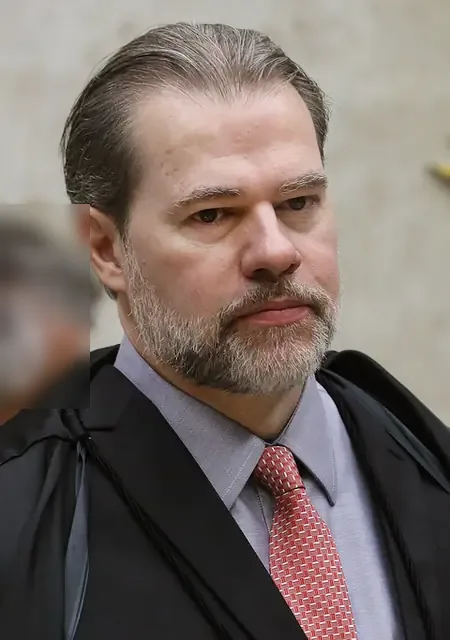
On May 21, 2024, Justice Dias Toffoli of Brazil's Supreme Federal Court (Supremo Tribunal Federal — STF) issued a ruling annulling all procedural acts taken against Marcelo Odebrecht by the 13th Federal Court of Curitiba under Operation Car Wash. [SOURCE: STF; fius.com.br citing STF ruling; La Estrella de Panamá citing EFE]
The basis: Toffoli concluded that the prosecutors involved in Operation Car Wash and the former judge, Sergio Moro, had violated Odebrecht's right to a full defense and due process, making 'constant adjustments and arrangements' to prevent him from exercising his legal rights. Moro, who later became Minister of Justice in the Bolsonaro government, was the presiding judge who issued the Car Wash convictions.
The annulment is specific: it covers the proceedings by the 13th Federal Court. It does NOT cover Odebrecht's own leniency and cooperation agreement — the document in which he admitted guilt and provided evidence against co-conspirators. That agreement remains valid. His admissions of guilt in that agreement stand.
The practical effect: Odebrecht's criminal conviction under Car Wash was annulled. He had already served his time under the cooperation deal: about two and a half years in a Curitiba jail from his June 19, 2015 arrest, then house arrest from December 2017. [SOURCE: Reuters; Agência Brasil]
The Prosecutor General (PGR) appealed Toffoli's annulment ruling in June 2024. As of September 2026, the status of that appeal requires verification — the case may be pending before the full STF bench.
The annulment does not make the bribes un-happened. The cooperation agreement — the document in which Odebrecht admitted guilt, described the bribery system in detail, and named the officials who received payments — remains legally valid. His admissions are in the record. The evidence that implicated officials across the region was produced by that agreement and its status is separate from the criminal proceedings that were annulled.
The annulment reflects something about Car Wash itself. The investigation that began in Brazil in 2014 ultimately expanded to cover the political class of an entire continent, producing convictions and resignations at the highest levels of multiple governments. Whether those convictions were procedurally sound is a question that Brazil's courts are now resolving case by case. Several other Car Wash convictions — including that of former President Luiz Inácio Lula da Silva — were also annulled by the STF on procedural grounds, and Lula returned to win the 2022 presidential election.
This piece does not editorialize on Brazilian politics or on whether the annulment reflects the justice system or its corruption. It states the outcome: proceedings annulled; cooperation agreement intact; PGR appeal pending; verify final status before publication.
IDENTITY
CASE RECORD

 ▶ WATCH
 ▶ WATCH
 ▶ WATCH