Nick Leeson
TAP TO READ FULL NARRATIVE — THE 88888 ACCOUNT (1,900 WORDS)
Barings Bank was founded in 1762. It financed the Louisiana Purchase. It helped the British government fund the Napoleonic Wars. By the time Nick Leeson arrived in Singapore in the early 1990s, Barings had been operating for 232 years — longer than the United States had existed.
It lasted three more.
On February 26, 1995, Barings Bank was declared insolvent. The cause: £827 million in losses accumulated by a single trader in a hidden account called 88888 — a number considered lucky in Chinese culture, chosen by Leeson originally to book a small accounting error he wanted to make disappear. [SOURCE: Singapore court record; Board of Banking Supervision inquiry, July 1995]
The losses did not disappear. They grew. For approximately three years, Leeson took increasingly large positions on Japanese interest-rate futures and options, booked his losses into account 88888, and reported profits to London. London paid him a bonus for his reported performance. The bonus was based on profits that did not exist.
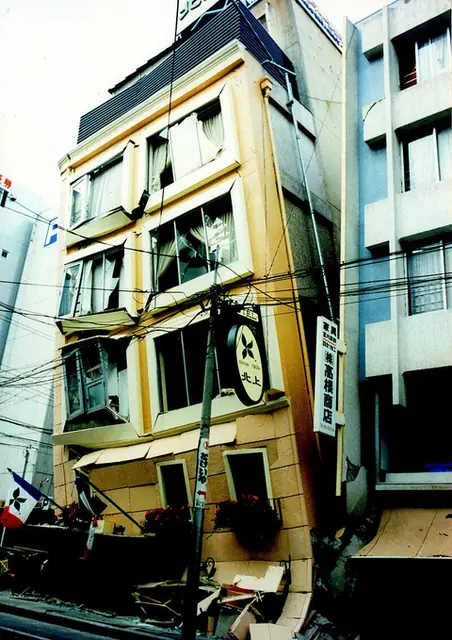
When the Kobe earthquake struck Japan on January 17, 1995, the Nikkei fell sharply and kept falling. The positions in account 88888 — which Leeson had been building larger, trying to trade his way back to even — became unrecoverable. The losses were terminal before London even understood the scale. [SOURCE: FT; Wikipedia citing sources]
On February 23, 1995, Leeson left Singapore. Three days later, Barings was insolvent. ING, the Dutch bank, acquired it for £1. [SOURCE: widely reported; ING acquisition record]
Barings had survived empires and financed wars. It was destroyed in three years by one trader — because the person taking the risk was the person recording it. The fraud was not clever. It was a missing control, exploited by a man who did not stop.
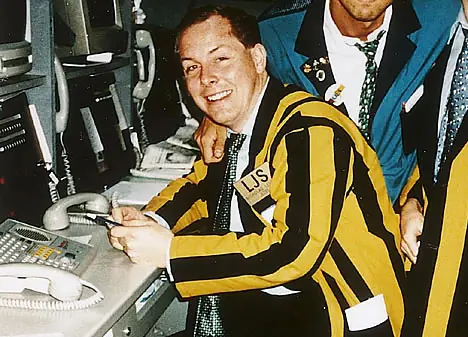
Nicholas William Leeson was born on February 25, 1967, in Watford, England. He left school at 18 and took a job as a clerk in a bank. He was good with numbers, ambitious, and — in the specific culture of 1980s London banking — the kind of person who could rise fast if given the chance.
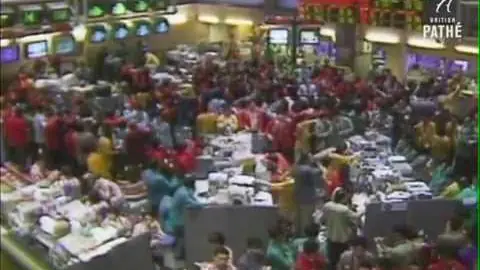
He joined Barings in 1989. Within a few years he was posted to Indonesia, then to Singapore, where Barings had a futures trading operation. In Singapore, Leeson was given an unusual degree of responsibility: he was both the head of the trading operation and the head of the back office — the settlement and record-keeping function. These two roles should never sit with the same person. The person who makes a trade should not be the person who records it. That separation is one of the foundational controls in regulated financial institutions.
At Barings Singapore, the control was absent. Leeson was, in effect, marking his own homework. When he made a mistake in 1992 — a junior trader on his team made an error that cost roughly £20,000 — he did not report it. He opened a new account to park the loss and told himself he would recover it. The account was numbered 88888. [SOURCE: Singapore court record; Wikipedia citing Board of Banking Supervision inquiry]
That decision — to hide a small error rather than report it — is the moment the fraud began. Everything that followed was the arithmetic consequence of that choice: conceal, trade to recover, lose more, conceal more, trade larger, lose larger.
From 1992 to 1995, account 88888 accumulated what Leeson could not recover. He was trading Nikkei futures and options — derivatives contracts linked to the performance of the Japanese stock market. His strategy: bet on stability. Buy contracts when the market fell, expecting it to recover. When it fell further, buy more.
The strategy is called 'doubling down' and it is the mechanism by which a recoverable mistake becomes an unrecoverable one. The position grows larger with each losing trade, because each new trade is sized to win back all the previous losses in a single recovery. If the market never recovers enough, the position grows until the institution cannot absorb it.
The Nikkei did not recover enough. By late 1994, the losses in account 88888 were in the hundreds of millions of pounds. Leeson was reporting profits. London was posting record results. His bonus for 1994 was approximately £130,000. [SOURCE: Wikipedia citing sources — verify figure] The profits were fabricated. The bonus was paid on fiction.
The control that should have caught this — an independent back office that reconciled trading positions against external records — did not exist in the form that would have been required. Internal auditors reviewed Barings Singapore's books. External auditors signed off on accounts. Neither caught the discrepancy between the positions in account 88888 and the external clearing house records, despite the fact that, by 1994, Barings was posting enormous margin calls to cover 88888's positions — margin calls that London was funding without fully understanding why. [SOURCE: Board of Banking Supervision inquiry, July 1995]
The Kobe earthquake of January 17, 1995 was not the cause of the fraud. It was the event that made the consequences irreversible. The quake sent the Nikkei down sharply in the days following. Leeson's existing positions — already billions of yen underwater — became terminal. He bought more contracts, trying to move the market. The market did not move. The losses became £827 million. [SOURCE: FT; Wikipedia; Singapore court record]
LEESON (Case 022) vs MADOFF (Case 004)
Control failure
Leeson: no separation between trading and back office. Madoff: no independent audit of returns. Both: the check did not exist.
Duration
Leeson: ~3 years (1992–1995). Madoff: ~17 years active Ponzi phase. Both: nobody looked.
Institution destroyed
Leeson: Barings — 232 years, one of Britain's most respected banks. Madoff: his own firm.
Discovery mechanism
Leeson: market moved against him until losses were terminal. Madoff: financial crisis forced redemption requests he could not meet. Both: not caught by auditors.
Sentence
Leeson: 6.5 years (Singapore). Madoff: 150 years (SDNY).
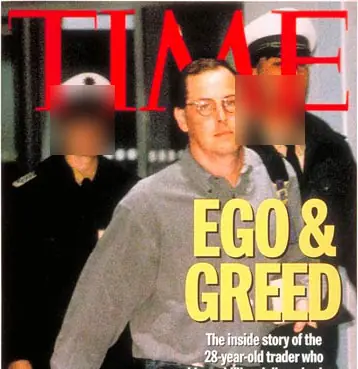
On February 23, 1995, Nick Leeson left Singapore with his wife. He left a note: 'I'm sorry.' He flew to Kuala Lumpur, then to Brunei, then to Frankfurt, where German authorities arrested him on March 2, 1995. [SOURCE: widely reported; Singapore court record]
In Singapore, the scale of the losses became clear to Barings in the days after he left. The margin calls — the cash required to maintain the positions in account 88888 — exceeded anything the bank could fund. Barings Bank went to the Bank of England and asked for emergency support. The Bank of England declined to organize a rescue. On February 26, 1995, Barings was placed into administration. [SOURCE: FT; Wikipedia citing sources]
ING, the Dutch financial group, acquired Barings and its approximately 1,200 employees for £1. [SOURCE: widely reported] The employees retained their jobs, largely. The shareholders — the people who owned Barings, including some long-serving employees with equity stakes — lost everything. Some pensioners lost portions of their retirement savings. A 232-year-old institution transferred ownership for one pound.
Leeson was extradited to Singapore. He pleaded guilty in December 1995 and was sentenced to six years and six months in prison. He served approximately three years and five months before being released in July 1999 for good behaviour. During his imprisonment, he was diagnosed with colon cancer and treated in prison. [SOURCE: Wikipedia citing sources — verify exact release basis and date]
After release, he wrote a memoir, became a speaker and commentator on risk management, and later became CEO of Galway United Football Club in Ireland. He is 59 years old. He is a living private individual and public commentator. This piece reports the record of the fraud and the sentence; it does not speculate about his current circumstances.
The Board of Banking Supervision — the UK regulatory body that investigated the Barings collapse — published its inquiry in July 1995. Its findings documented specifically what controls had been absent and how those absences allowed the losses to accumulate undetected for three years. [SOURCE: Board of Banking Supervision inquiry, July 1995 — verify title]
The primary failure: separation of duties. Leeson combined the roles of trader and head of back office. The back office settles trades and records positions — it is supposed to be independent of the trading desk so that errors and fraud can be detected before they compound. At Barings Singapore, the same person did both. The check did not exist.
The secondary failures compounded the primary one. Internal audits did not catch the discrepancy. External auditors did not catch it. London management noticed that Barings Singapore was requiring unusually large margin calls — funding requests to cover positions — but did not investigate why with sufficient rigour to discover account 88888. The signals were present. The investigation was not.
This is the lesson the brief asks to be stated plainly, because it applies directly to every case in this series that involves an institution that failed to check: the compliance function is not a formality. It is the institution's only protection against the person inside it who decides not to stop. When the compliance function does not function, the only remaining check is the market — and the market checks through collapse.
Barings was 232 years old. It had never lost a war. It lost one employee.
It took one man, one account, and three years. Barings had outlived empires and financed wars. It did not survive a trader who booked his own losses and kept trading to hide them. Nobody separated the risk from the record. The bank was older than America. The control was missing the whole time.
IDENTITY
CASE RECORD
 ▶ WATCH
 ▶ WATCH
 ▶ WATCH