Bernard Lawrence Madoff
TAP TO READ FULL NARRATIVE — 48 YEARS. NOBODY ASKED. (3,800 WORDS)
For 48 years, nobody asked the question that would have ended it.
The question was simple enough. The returns Bernie Madoff reported — steady, consistent, market-defying — should have attracted scrutiny from the first year they appeared implausible. Instead they attracted more investors. The more consistent the returns, the more people wanted in. The more people who wanted in, the more legitimate the operation appeared to those who were already there. Trust compounded the way the returns claimed to.
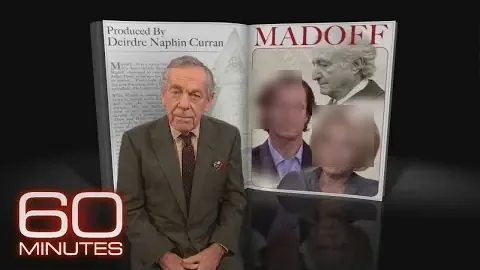
Bernard Lawrence Madoff founded his investment firm in 1960. He was arrested on December 11, 2008. In between: 48 years of fabricated account statements, approximately 4,800 client accounts showing $64.8 billion that did not exist, and a reputation so solid that when a whistleblower told the SEC what he had found, the regulator did not act in time to prevent the collapse. [SOURCE: SEC Press Release 2008-293; SDNY]
When the scheme finally ended, it ended not because regulators caught it, not because an investigator broke it, but because the 2008 financial crisis forced redemption demands that exceeded what the scheme could pay. And even then, the arrest came not from outside — it came from his own sons.
Bernard Lawrence Madoff was born on April 29, 1938, in Queens, New York.
He was not born into money. He was not a legacy admission at a white-shoe firm. He did not inherit a seat on any exchange. The Madoff story — the one he told and the one that made him — was the story of a man who built something from nothing, who understood the markets before the markets understood themselves, who earned every credential through intelligence and application and relentless, patient work.
He founded Bernard L. Madoff Investment Securities LLC in 1960 with $5,000 he had saved from working as a lifeguard and a sprinkler installer — as Madoff himself described it and as widely repeated in the federal record. [SOURCE: Madoff's own account; widely reported in federal record commentary] He was twenty-two years old.
He built the firm into a legitimate force. Madoff Investment Securities became a market maker — a firm that stood ready to buy and sell securities, providing liquidity to the market, operating in the space between the buyer and seller that most people never think about. The firm was real. The market making operation was real. The trades were real.
And Bernie Madoff became, through decades of legitimate operation, one of the most respected figures on Wall Street. He served as chairman of Nasdaq — the electronic stock exchange — a position that placed him at the very centre of the American financial system's infrastructure. When regulators sought industry input on market structure, Madoff was the kind of person they called.
This is the detail that makes everything else possible: he was not an outsider running a scam. He was an insider, fully embedded in the system, trusted by the system, decorated by the system. The fraud did not fool Wall Street from outside. It ran in Wall Street, wearing Wall Street's own credentials.
The investment advisory side of the business was the fraud. Not the market making. Not the trading operation. A separate function, kept deliberately apart, in which Madoff accepted money from clients and promised to invest it using a strategy he called the split-strike conversion.
The split-strike conversion is a real options strategy. It involves buying a basket of large-cap stocks while simultaneously selling call options above the current price and buying put options below it, limiting both the upside and the downside. It is a legitimate technique that produces modest, consistent returns with reduced volatility.
Madoff used it as a story. He never executed the strategy. He never bought the stocks. He never executed the options. He simply described the strategy, fabricated the account statements showing it working, and paid withdrawals from new investor deposits. [SOURCE: US v. Madoff, 09 Cr. 213 (DC) — guilty plea; SDNY]
The mechanism of a Ponzi scheme is precisely this simple:
The scheme survived for reasons that are, in retrospect, a catalogue of institutional failure. The returns were too consistent — markets do not move that smoothly — but consistency is not alarming when you trust the person reporting it. The strategy was described but never independently verified. The auditor was a tiny, obscure firm, not the Big Four accountant a firm of this scale should have used. [SOURCE: SEC / DOJ record] These were all flags. They were not read as flags.
The compliance officer was his brother.
Peter Madoff — Bernard's younger brother — served as senior managing director and chief compliance officer of Bernard L. Madoff Investment Securities. The chief compliance officer is, in theory, the internal guard. The person whose job is to ensure the firm follows the law. The check on the founder. [SOURCE: US v. Peter Madoff, S7 10 Cr. 228 (LTS), SDNY]
In this firm, the check on the founder was the founder's brother. The result was not compliance — it was the appearance of compliance, maintained by the same family loyalty that ran everything else in the operation.
Peter Madoff pleaded guilty and was sentenced to 10 years in federal prison. [SOURCE: SDNY]
Shana Madoff — Peter's daughter, Bernard's niece — served as the firm's rules and compliance attorney. She has maintained that she had no knowledge of the fraud.
Mark Madoff and Andrew Madoff — Bernard's sons — both worked at the firm in the legitimate trading business, separated from the investment advisory operation their father ran. On December 10, 2008, their father told them the investment advisory business was 'one big lie.' They went home. The next morning, December 11, 2008, they called their attorney and turned their father in to federal authorities. [SOURCE: DOJ; widely reported from federal record]
The sons did not know. When they found out, they reported him. They spent the years that followed living under the weight of a name they shared with the man who had built one of the largest frauds in history, and who had been exposed by them.
The 4,800 client accounts held a combined $64.8 billion in fabricated value as of November 30, 2008. That number — $64.8 billion — is the prosecutors' estimate of the fraud. [SOURCE: SDNY prosecutors, cited in sentencing] It is the number in the account statements. It is not what investors actually lost.
The actual principal lost — money that went in and did not come back — was approximately $17 billion, based on the Irving Picard trustee's calculations. [SOURCE: SIPC / Trustee record] Some investors had already withdrawn more than they put in, having received years of fake returns that came from other investors' deposits. Those investors made money — from other victims. The moral accounting is not clean.
The victims were not all institutions. They were not all sophisticated investors who should have known better. Many were retirees, charitable foundations, and individuals who had trusted Madoff with their savings over decades. Jewish communities in particular were heavily targeted — Madoff operated extensively within Jewish philanthropic and social circles, which gave the scheme a warm referral network built on community trust. [SOURCE: DOJ / widely documented in federal record commentary]
The charities that lost money did not simply lose returns. They lost principal. Some could not make grant payments. Some closed. The damage ran downstream from the account statements into hospitals that did not get funded, scholarships that were not awarded, organisations that had built their endowments over decades and discovered those endowments were fiction.
Forfeiture ordered: $170.8 billion. [SOURCE: SDNY preliminary forfeiture order, June 26, 2009] This is a legal figure: what prosecutors said flowed through the scheme's main account. It is not restitution and not assets he held. It is not the same as the fabricated account value or the actual principal lost. Three numbers, three meanings.
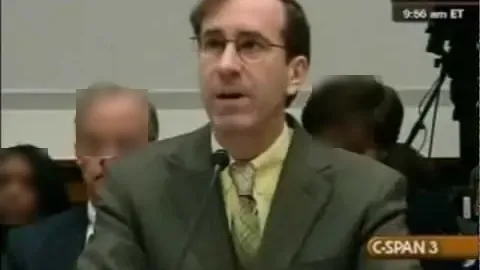
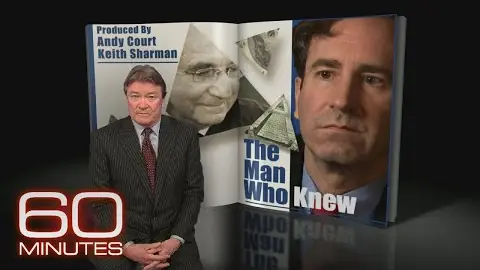
In 1999, a financial analyst named Harry Markopolos was asked by his employer to reverse-engineer Bernie Madoff's investment strategy. His employer wanted to replicate the returns.
Markopolos looked at the numbers for — by his own account, in Congressional testimony — four hours, and determined they were mathematically impossible. [SOURCE: Markopolos Congressional testimony; widely documented from public record] The consistency of the returns, the strategy as described, the market conditions during the periods in question — they did not add up. He concluded that Madoff was either front-running — trading on advance knowledge of customer orders — or running a Ponzi scheme. [SOURCE: Markopolos testimony; widely documented]
He went to the SEC. In 2000. He told them what he had found. He submitted a formal complaint in 2005 entitled 'The World's Largest Hedge Fund Is a Fraud' — naming Madoff directly, providing the mathematical analysis, explaining exactly what the numbers showed. [SOURCE: widely documented from SEC record]
The SEC investigated. They did not find the fraud.
They investigated again. They did not find the fraud.
Markopolos continued warning. The SEC continued not finding. By 2008, he had submitted his findings multiple times over eight years. The regulator charged with protecting investors from exactly this kind of fraud had been told, explicitly, in writing, with the mathematics laid out, that the largest Ponzi scheme in history was operating on their watch.
The scheme collapsed anyway. Not because of the SEC. Because of the financial crisis.
The 2008 financial crisis was the specific event that ended it.
As markets collapsed in the autumn of 2008, investors everywhere needed cash. The redemption requests that came into Bernard L. Madoff Investment Securities in November and December 2008 were approximately $7 billion — more than the scheme had available to pay. [SOURCE: widely documented from SDNY record] For 48 years, inflows had exceeded or matched outflows. Now they did not. The mathematics of a Ponzi scheme are simple: it ends when it cannot pay withdrawals from new deposits.
Madoff confessed to his sons on December 10, 2008. He told them the investment advisory business was a fraud. He said he intended to surrender to authorities in a week, after distributing approximately $300 million in remaining assets to employees, family, and select investors. [SOURCE: DOJ record / federal complaint]
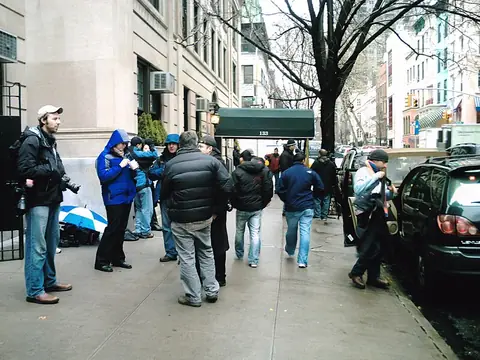
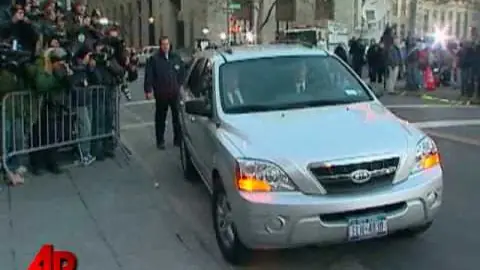
His sons did not wait a week. They called their attorney that night. The next morning — December 11, 2008 — federal agents arrested Bernard Madoff at his New York apartment. He did not resist. He said he knew why they were there.
The arrest was quiet. Forty-eight years of the largest Ponzi scheme in history ended with a door opening and federal agents standing in a hallway.
The numbers are easier to state than what happened to the people.
On December 11, 2010 — exactly two years to the day after his father's arrest — Mark Madoff died by suicide. He was 46 years old. He had cooperated with authorities. He had turned his father in. He spent the two years following the arrest under public scrutiny, named in civil lawsuits as a consequence of bearing the Madoff name, separated from his family by the weight of what the name now meant. [SOURCE: widely documented from public record]
Andrew Madoff, Bernard's younger son, was diagnosed with mantle cell lymphoma in 2003 — before the arrest. He died on September 3, 2014, from that disease. He was 48 years old. Like his brother, he had turned his father in. He lived to see his father imprisoned but not to see the full legal proceedings conclude. [SOURCE: public record; widely documented]
Peter Madoff — the brother, the chief compliance officer — was sentenced to 10 years in federal prison. He cooperated with investigators. His daughter Shana, the compliance attorney, was not charged.
Ruth Madoff, Bernard's wife of 49 years, was not charged. She initially attempted to keep $70 million in assets. Under a settlement with prosecutors, she was permitted to keep $2.5 million. She has lived under the Madoff name since. [SOURCE: DOJ / SEC record]
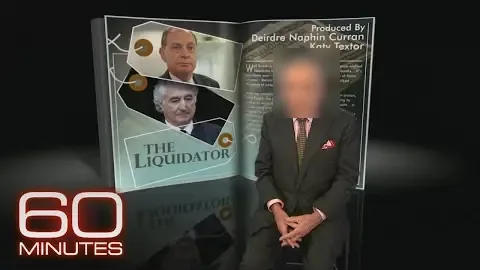
The investors — the charities, the retirees, the foundations — rebuilt where they could and did not where they could not. The Irving Picard trustee appointed to recover assets eventually distributed billions to victims over more than a decade of litigation. The accounting is ongoing.
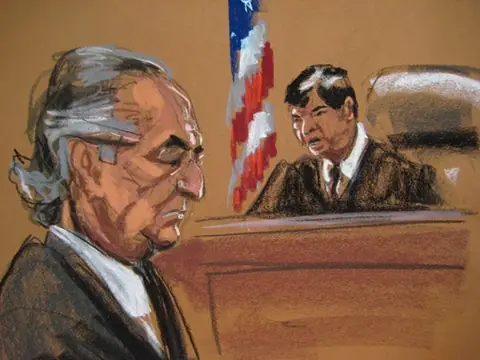
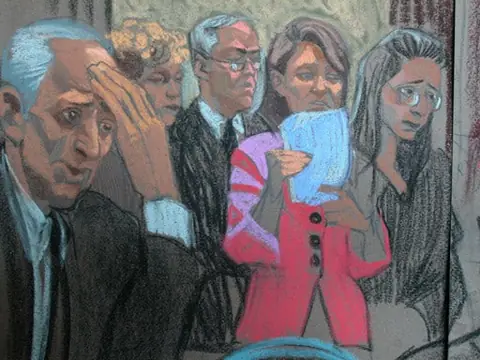
On June 29, 2009, Judge Denny Chin sentenced Bernard Lawrence Madoff to 150 years in federal prison.
It was the maximum. Prosecutors had asked for it. The victims who spoke at sentencing had asked for it. Judge Chin delivered it.
In the sentencing, Chin noted that the crimes were 'extraordinarily evil,' that Madoff had 'coldly and deliberately hurt thousands of people,' and that a severe sentence was required both for punishment and to send a message about the seriousness of financial fraud at this scale. [SOURCE: SDNY sentencing record, June 29, 2009]
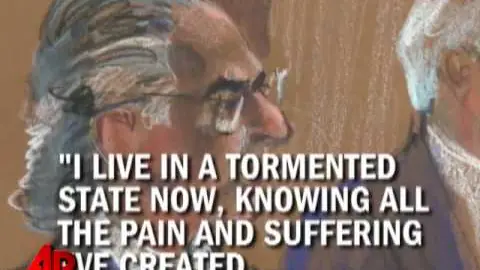
Madoff spoke at sentencing. He apologised. He said he had lived for decades in fear and torment, that the pressure had been 'unbearable,' that he would live with the regret for the rest of his life. Whether any of this was true or performed, the victims present had no obligation to receive it as true, and most did not.
He was 71 years old at sentencing. The 150-year term was symbolic in the way that only mathematics makes something symbolic — he would serve the rest of his natural life regardless of the specific number. But the number mattered to the victims, who needed the court to say, in the language courts speak, that what had been done to them was of a scale and a deliberateness that required the maximum the law allowed.
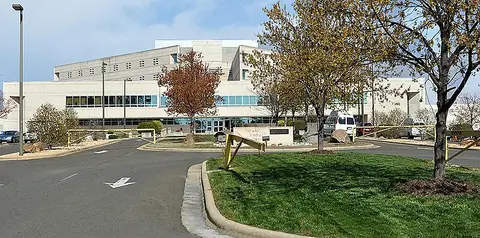
He was housed at the Federal Medical Center in Butner, North Carolina — a facility for inmates with serious medical conditions. In 2020, his attorney requested compassionate release, stating that Madoff suffered from end-stage renal disease and other chronic conditions and had less than 18 months to live. The request was denied. Judge Chin noted that the criminal conduct went on for decades and he was caught only because the scheme unravelled — not because he stopped. [SOURCE: AP / Bureau of Prisons; court denial record]
The series argument sharpens here. Case 001 and Case 002 were both about visibility — the compulsion to display the crime, to have an audience for it, to post it, stream it, flex it into the public record.
Madoff was the opposite.
He did not display the fraud. He concealed it inside a respectable operation, surrounded it with credentials and family and institutional legitimacy, and then let time do the rest. Every year the scheme survived was a year that added credibility to it. Every consistent return was evidence, in the minds of the investors receiving it, that the returns were real. The longer it ran, the more impossible it became to question.
Hushpuppi ran for nine years and built a brand that 2.5 million people followed. Malone Lam ran for fourteen months and spent faster than he could count. Madoff ran for 48 years and never once posted a photo of the money.
The mechanism of trust is what the Madoff case documents. Not the mechanism of deception — the mechanism of trust. How trust compounds over time. How a reputation, once established, becomes self-reinforcing. How institutions designed to check that trust can fail to do so for decades. How the very qualities that make someone trustworthy — consistency, patience, restraint, the refusal to make spectacular claims — can be the disguise.
Harry Markopolos told the SEC. Eight years of warnings. The scheme ran eight more years after the first one. That is not a story about one man's cleverness. It is a story about institutional failure at scale — the failure of the regulator, the failure of the auditor, the failure of the due diligence that sophisticated investors are supposed to perform and did not.
On April 14, 2021, Bernard Lawrence Madoff died at the Federal Medical Center in Butner, North Carolina.
He was 82 years old. Cause of death: hypertension caused by heart and kidney disease. [SOURCE: Associated Press / Bureau of Prisons confirmation, April 14, 2021]
He had been imprisoned for twelve years. He died having served approximately 8% of his 150-year sentence — which was the entirety of his remaining life, as the mathematics of the sentence had always intended.
His attorney had tried to get him out in 2020. The court denied it. Judge Chin's words at the denial: he was caught only because his scheme began to unravel with the financial crisis, when he was unable to keep up with the increasing requests for redemptions. He had not stopped. He had been stopped.
Mark was already gone. Andrew was already gone. Peter had served his time. Ruth was living under what the name now meant.
The victims were still in court. The Picard trustee was still recovering assets. The foundations that had lost their endowments were still trying to rebuild. The accounting that a 48-year scheme produces does not resolve quickly, and it does not resolve completely. Some losses are permanent.
He died in a federal medical facility in North Carolina. Not in the apartment on the Upper East Side. Not at the Palm Beach house. Not in the French Alps property his firm had paid for. In a federal medical facility, from kidney disease, at 82, with a 150-year sentence that had always been a statement rather than a calculation.
Three figures, three meanings: $64.8B (fabricated account value), $50B (Madoff's own liability statement), $170.8B (forfeiture ordered). Do not conflate them. Markopolos warning timeline verified from public record. Andrew Madoff death (September 2014, lymphoma) verified from public record. Mark Madoff death (December 11, 2010) verified from public record — handled in the text with appropriate weight.
IDENTITY
CASE RECORD
WHAT THIS CASE ESTABLISHED
 ▶ WATCH
 ▶ WATCH
 ▶ WATCH
 ▶ WATCH
 ▶ WATCH
 ▶ WATCH