Fred Ajudua
INDIVIDUALBORN IN 🇳🇬 NIGERIA ▸TAP TO READ FULL NARRATIVE — THE LAWYER (800 WORDS)
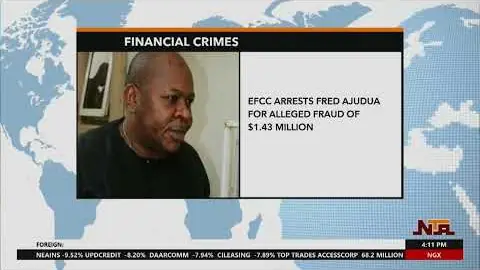
Fred Chijindu Ajudua, born in 1960 per Nigerian reporting, is a Nigerian lawyer from Ibusa, Delta State — a graduate of the University of Benin. He is also, per the Economic and Financial Crimes Commission, one of Nigeria's most persistently accused advance-fee fraud operators. At one point in 2003, EFCC Chairman Nuhu Ribadu publicly stated that Ajudua had twelve cases pending against him. The cases span decades and multiple jurisdictions; the one now on trial is that he obtained $1,043,000 by false pretences from a Palestinian businessman — he was charged in 2005 and has pleaded not guilty.
The advance-fee fraud model he is accused of operating is the foundational 419 format: contact a target with an offer of a share in a large sum of money; request that the target pay fees, taxes, and commissions to receive their share; collect the payments and disappear. His alleged victims include a Canadian, a German, two Dutch nationals, a Palestinian, and others — the scheme was international in its targeting. [SOURCE: EFCC; Premium Times Nigeria; Wikipedia citing Nigerian press]
Ajudua has spent substantial periods in custody while proceedings have dragged over decades. Bail granted on February 3, 2005, for medical treatment in India was alleged by the EFCC to have enabled him to flee; the commission subsequently sought him as a fugitive. Armed men, by the EFCC's account, thwarted an arrest attempt at Ibusa on March 20, 2007. The $1,043,000 charge itself was filed in 2005; he was not arraigned on it until June 4, 2018. He has surfaced and disappeared across the years in a pattern that has defined his case history. [SOURCE: EFCC; This Day Live; Wikipedia]
On May 9, 2025, the Nigerian Supreme Court allowed the EFCC's appeal and revoked bail that had been granted to Ajudua by the Court of Appeal in the $1,043,000 case involving Zad Abu Zalaf — a Palestinian businessman who is described as the victim. The Supreme Court directed that Ajudua be remanded and that the Lagos State Chief Judge return the case to Justice Dada to continue trial. The EFCC arrested him in Abuja four days later, on May 13. A fresh bail application failed in November 2025; on January 30, 2026, the Court of Appeal in Yola granted him bail; and on March 9, 2026, Justice Dada adjourned the trial indefinitely while his lawyers asked the Supreme Court to set aside its own ruling. [SOURCE: EFCC press release, May 9, 2025; BusinessDay, May 14, 2025; Sahara Reporters and TheCable, March 10, 2026]
Advance-fee fraud (419, named after Section 419 of the Nigerian Criminal Code) is a criminal category that predates the internet — its modern form was a Nigerian speciality that became globally notorious through the 1990s email-blast era. The mechanism is old: promise a share in wealth; request fees to release the wealth; collect the fees; the wealth does not exist. What changed with email was scale: the same letter could reach millions of people simultaneously.
Ajudua's alleged conduct predates the email era in part — some of the cases date to the early 1990s. His longevity in proceedings reflects a pattern common in Nigerian 419 cases: jurisdictional disputes (crimes committed outside Nigeria but prosecuted in Nigeria); witnesses who decline to travel; repeated adjournments for health or procedural reasons; and the Nigerian court system's documented backlog.
The series includes Nwude (Case 021) and Anajemba (Case 088) as the Nigerian fraud cases with completed convictions. Ajudua is the third entry in the Nigeria set — documented here as an ongoing case, source-poor by the series' standards, with the explicit note that the EFCC press releases are the primary available source and should be labeled as such. The site should flag this case as pending and update it when proceedings conclude.
IDENTITY
CASE RECORD

 ▶ WATCH
 ▶ WATCH