James Zhong
TAP TO READ FULL NARRATIVE — THE POPCORN TIN (3,000 WORDS)
In November 2021, federal agents executed a search warrant at a residence in Gainesville, Georgia.
They found a gaming computer. Inside it, on a single-board computer and various storage devices: approximately 50,676 Bitcoin. [SOURCE: DOJ forfeiture filings]
They found $661,900 in cash. [SOURCE: DOJ]
They found gold and silver bars. Hidden in a popcorn tin. Buried under blankets in a bathroom closet. [SOURCE: DOJ / reporting]
The Bitcoin, at the time of seizure in November 2021, was worth approximately $3.4 billion. [SOURCE: DOJ — value at Nov 2021 prices]
50,676 Bitcoin — $3.4 billion at November 2021 prices. In a house in Georgia. On a computer. Next to a popcorn tin full of gold bars in a bathroom.
The man who lived in the house was James Zhong. He had stolen the Bitcoin nine years earlier — from a website the FBI had already shut down, from an operator the federal government had already sentenced to die in prison, from a marketplace that was itself a crime scene.
He stole from the criminals. Then he sat on it. For nine years. And then the government came and took it all.
Before the world knew his name, the blockchain knew his wallet.
In the years after Silk Road was shut down — after Ross Ulbricht was arrested in a San Francisco library in October 2013, after the FBI seized the marketplace's servers, after the federal government catalogued what it had taken — a question persisted in the forensic record. The Bitcoin did not add up.
Silk Road had processed an enormous volume of transactions during its two and a half years of operation. When the government seized the servers, it expected to find the Bitcoin that had flowed through the marketplace's escrow system. It found some. It did not find all of it. A substantial amount was missing — not misplaced in the accounting but absent from the wallets the government now controlled.
Somebody had taken it before they got there.
The wallet that held the missing Bitcoin became known in blockchain forensics circles as the "Individual X" wallet. It was one of the largest single holdings of Bitcoin linked to an identifiable — if unnamed — person. Chainalysis and other blockchain analysis firms tracked its existence. The coins sat. They did not move. Year after year, the wallet held still while Bitcoin's price climbed from hundreds of dollars to thousands to tens of thousands, and the value of the coins inside it grew from a curiosity into a fortune into something that could only be described with a B.
For eight years, Individual X was a ghost in the ledger. A wallet with no face. A theft with no suspect. The largest known haul from the most famous darknet marketplace in history, sitting in a single address, untouched, while the man who built Silk Road sat in a federal prison cell and the man who robbed it sat in a house in Georgia.
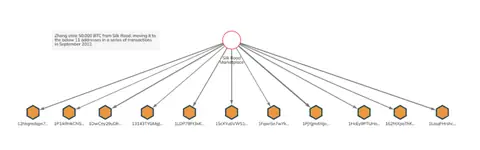
The theft happened in September 2012. Silk Road was still operational. Ulbricht was still free, still running the marketplace under the name Dread Pirate Roberts, still a year away from the library and the handcuffs.
What James Zhong found was a flaw in the withdrawal system.
Silk Road operated on a deposit-then-withdraw model — users deposited Bitcoin into internal accounts, transacted on the marketplace, and withdrew their balances. The system was designed so that a user could not withdraw more than they had deposited. That was the assumption. It was also wrong.
Zhong discovered that the withdrawal-processing logic could be exploited — that by structuring his transactions in a specific way, he could withdraw far more Bitcoin than he had put in. [SOURCE: DOJ plea agreement / press release]
He exploited the flaw. He took approximately 51,680 Bitcoin. [SOURCE: DOJ]
51,680 Bitcoin. In September 2012, that was worth a fraction of what it would later become — Bitcoin was trading in single digits to low double digits for much of 2012. The dollar value at the time of theft was modest by the standards of this series. The value of the same coins nine years later, when the government seized them, was approximately $3.4 billion. [SOURCE: DOJ — Nov 2021 valuation]
The gap between those two numbers — the value at theft and the value at seizure — is the specific financial phenomenon that makes this case unusual. He did not steal $3.4 billion (Nov 2021 value). He stole 51,680 Bitcoin, which became worth $3.4 billion (Nov 2021 value) while he held it. The distinction matters because precision matters, and because the raw number — 51,680 BTC — is the fact, and the dollar amount depends entirely on which date you attach to it.
This is the part that makes the case.
He had 51,680 Bitcoin. He had taken it from a marketplace that, at the time of the theft, was still the most actively monitored criminal enterprise on the internet. Every law enforcement agency with a cyber mandate was watching Silk Road. The FBI was building the case that would shut it down a year later. The blockchain was public — every transaction visible to anyone with the tools to read it.
And James Zhong did nothing.
He moved the Bitcoin into a consolidated holding. He sat on it. He did not spend it. He did not convert it. He did not buy houses or cars or watches or Birkin bags. He did not throw a $75,000 birthday party or rent a mansion for $68,000 a month or stream himself on Discord celebrating the moment the coins arrived.
He lived in Gainesville, Georgia. He held the Bitcoin. He waited.
One year. The FBI shut down Silk Road. Ulbricht was arrested. The government seized servers and wallets. Zhong's coins were not among what they found.
Two years. Bitcoin climbed. The coins sat.
Five years. Bitcoin entered the mainstream. Futures were listed on the CME. The price passed $19,000 in December 2017. Zhong's 50,000-plus coins were worth, briefly, nearly a billion dollars. He did not sell.
Seven years. Bitcoin crashed, recovered, crashed again. The coins sat.
Nine years. November 2021. Bitcoin reached its all-time high near $69,000. Zhong's holding was worth approximately $3.4 billion (Nov 2021 value). [SOURCE: DOJ — Nov 2021 valuation]
And then the government knocked on his door.
Every other case in this series is about people who could not stop spending. Hushpuppi posted every purchase. Malone Lam bought 31 cars in a month. Madoff maintained the lifestyle for decades. SBF lived in a penthouse in the Bahamas. The spending is always the evidence, and the evidence is always the spending.
James Zhong spent almost nothing. He held the largest stolen Bitcoin fortune in history and he waited, quietly, in a house in Georgia, while the value grew from thousands to millions to billions. The patience was the strategy. The patience was also, in the end, not enough — because the blockchain does not forget, and nine years is only a long time for a person. For a ledger, it is nothing.
The United States government seized approximately 50,676 Bitcoin from James Zhong's residence in November 2021. [SOURCE: DOJ forfeiture filings]
The seizure was not announced immediately. The government held the information for a year — conducting its investigation, building its case, confirming the chain of evidence that connected the Individual X wallet to the man in the house in Georgia.
The specifics of the seizure, as described in DOJ filings: the Bitcoin was stored on devices in his home. A gaming computer. Storage devices. The $661,900 in cash and the gold and silver bars in the popcorn tin were also seized. [SOURCE: DOJ]
The popcorn tin is not a footnote. It is the image the case produces — a man with 50,676 BTC — $3.4 billion at November 2021 prices — on a computer, with gold bars hidden in a tin that once held caramel corn, under blankets in a bathroom closet. The juxtaposition between the scale of the digital fortune and the smallness of the physical hiding place tells you something about the man's relationship to the money. He did not live like a man who had billions in Bitcoin. He lived like a man who had a secret.
A note on the numbers: he stole approximately 51,680 BTC. The government seized approximately 50,676 BTC. The difference — roughly 1,004 BTC — is itself a detail. Per DOJ, those coins were not spent: Zhong voluntarily surrendered them to the government (1,004.15 BTC in total, beginning in March 2022). By his sentencing in April 2023, the government held final forfeiture orders for 51,680.32 BTC. [SOURCE: US Attorney SDNY, April 14, 2023, US v. Zhong, 22 Cr. 606 (PGG)]
On November 7, 2022, the Department of Justice announced that "Individual X" — the ghost in the Silk Road ledger, the wallet that blockchain forensic firms had tracked for nearly a decade — was James Zhong. [SOURCE: DOJ / SDNY press release, 7 Nov 2022]
He had pleaded guilty three days earlier, on November 4, 2022, to one count of wire fraud. [SOURCE: DOJ plea agreement]
One count. Wire fraud. For the theft of 51,680 Bitcoin from the most famous darknet marketplace in history — a theft that, measured by the value of the assets at seizure, was the largest individual cryptocurrency recovery the US government had ever executed.
The charge was not computer fraud, not money laundering, not conspiracy. Wire fraud. A single count that carried the entire weight of a $3.4 billion (Nov 2021 value) seizure.
James Zhong was sentenced to one year and one day in federal prison. [SOURCE: SDNY sentencing, 2023]
One year and one day.
In a series where Madoff received 150 years, where Stanford received 110, where Ulbricht received two life sentences, where SBF received 25 years, where Gonzalez received 20 and was released in 2023 — Zhong received one year and one day for the largest Bitcoin seizure in American history.
The sentence requires explanation, because the number on its face appears absurd relative to the dollar figure. The explanation has three parts.
First, cooperation. Zhong cooperated with the government. He did not flee. He did not destroy evidence — no phone tossed into Biscayne Bay, as Malone Lam did when the FBI came for him in Case 002. When the agents arrived at Zhong's door, the Bitcoin was there, the cash was there, and the gold was in the popcorn tin. He pleaded guilty. He assisted the government in recovering assets. Cooperation, in the federal system, is the single most powerful mitigating factor at sentencing.
Second, the victim. Silk Road was not a legitimate business. It was a criminal marketplace whose founder was convicted on five federal counts including running a continuing criminal enterprise. The "victim" of Zhong's theft was a crime scene. The moral weight that a judge assigns to a theft is influenced by the character of the thing stolen from — and stealing from a drug marketplace does not carry the same weight as stealing from pensioners or a sovereign fund.
Third, recovery. The government got the money back. Nearly all of it. 50,676 of 51,680 Bitcoin. The forfeiture was almost complete. In cases where restitution is the goal and the restitution is achieved, the punitive element of the sentence is reduced. The government did not need to punish Zhong into returning the money. He had already returned it — or, more precisely, the government had already taken it.
One year and one day. The "and one day" is a technical feature of federal sentencing: a sentence of exactly one year is served in full, but a sentence of one year and one day qualifies the defendant for good-time credit, which can reduce the actual time served. The extra day is, paradoxically, a benefit.
Case 013 and Case 016 are the same story told from two positions.
Ross Ulbricht built Silk Road. He created the anonymous marketplace, the Bitcoin escrow, the Tor hidden service. He ran it for two and a half years under the name Dread Pirate Roberts. He was arrested in October 2013, convicted on five counts, and sentenced to two life sentences plus forty years. In January 2025, he was pardoned by President Trump. [SOURCE: Executive pardon, 21 January 2025]
James Zhong found the flaw in what Ulbricht built. He exploited the withdrawal system, took 51,680 Bitcoin, and held it for nine years while the government shut down the marketplace, arrested its founder, and spent nearly a decade trying to account for where the money had gone.
Ulbricht received two life sentences. Zhong received one year and one day.
Ulbricht built the infrastructure for anonymous criminal commerce and was sentenced to die in prison. Zhong exploited a bug in that infrastructure, stole from it, returned the money when caught, and served twelve months.
The contrast is not a commentary on justice — it is a fact of how the federal system weighs different kinds of conduct. Building the machine that enables the crime is punished more severely than exploiting a flaw in the machine. The architect receives a harsher sentence than the burglar. The system that processed millions of illegal transactions was judged more dangerous than the man who found the one transaction the system got wrong.
Ulbricht was pardoned. Zhong served his time. The Bitcoin went to the US government, which sold portions of it at public auction. The marketplace is gone. The money is accounted for. The two men who defined its history — the builder and the thief — are both free.
The largest single seizure of cryptocurrency by the US government at the time of announcement — approximately 50,676 Bitcoin, valued at approximately $3.4 billion (Nov 2021 prices). [SOURCE: DOJ]
The "Individual X" investigation demonstrated that blockchain forensics can identify wallet holders years or decades after a transaction, even when the coins are not moved. The ledger does not forget. Time is not a defence against a public blockchain.
A sentence of one year and one day for a theft valued in the billions — the lightest sentence-to-dollar ratio in this entire series — established that cooperation, victim character, and asset recovery weigh more heavily in federal sentencing than the raw dollar figure.
The case recovered the Bitcoin the FBI could not find when it shut down the marketplace in 2013 — accounted for nine years later, in a house in Georgia, in a popcorn tin and a gaming computer. Zhong voluntarily surrendered an additional ~1,004 BTC beyond what agents seized, bringing the total under final forfeiture orders to ~51,680.3 BTC.
He stole 51,680 Bitcoin from a darknet marketplace in September 2012.
He put it on a computer. He put gold bars in a popcorn tin. He put the tin under blankets in a bathroom closet. He lived in Gainesville, Georgia.
He waited nine years. The Bitcoin went from being worth thousands to being worth $3.4 billion (Nov 2021 value). He did not spend it. He did not post it. He did not celebrate it. He did not tell anyone — as far as the record shows — what was sitting on the hard drive in his house.
The blockchain did not care about his patience. The ledger recorded the theft in 2012 and held the record until 2021, when the government matched the wallet to the man and drove to Georgia with a warrant.
He cooperated. He pleaded guilty. He served one year and one day.
Jordan Belfort stole $200 million and served 22 months. Malone Lam stole 4,100 BTC from a single victim and faces decades. Albert Gonzalez stole 170 million card numbers and received a twenty-year sentence. James Zhong stole 51,680 BTC — valued at $3.4 billion (Nov 2021 value) — and served a year.
The difference is not the amount. The difference is who you steal from and whether the government gets it back.
He robbed the robbers. The state took the loot. The popcorn tin is in an evidence locker somewhere, and the Bitcoin is in the US Treasury's account.
Every Bitcoin valuation carries a date. The theft total (51,680 BTC) and the initial seizure (50,676 BTC) are distinguished throughout — the additional ~1,004 BTC was voluntarily surrendered by Zhong, bringing total forfeiture to ~51,680.3 BTC. This involves a living person who has been convicted, sentenced, and has served his sentence.
IDENTITY
CASE RECORD

 ▶ WATCH
WHAT HE DID AND DIDN’T DO
Every other case in this series is about people who could not stop spending. Hushpuppi posted every purchase. Malone Lam bought 31 cars in a month. SBF lived in a $30M penthouse. James Zhong spent almost nothing. The patience was the strategy. The patience was not enough — because the blockchain does not forget, and nine years is only a long time for a person. For a ledger, it is nothing.