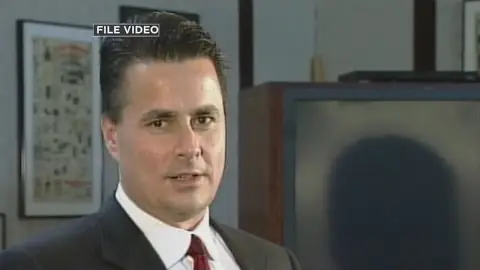
Tom Petters
TAP TO READ FULL NARRATIVE — THE INVISIBLE (2,000 WORDS)
Tom Petters owned Polaroid. He owned a stake in Sun Country Airlines. He had previously owned Fingerhut, the consumer credit catalogue company. He sat on charity boards in Minnesota. He employed thousands of people in real businesses that made real products.
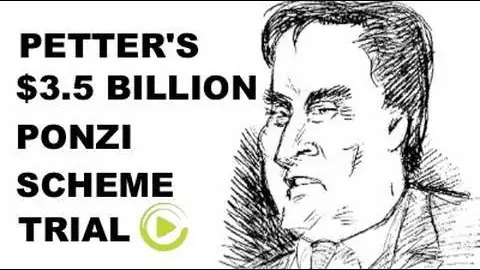
Behind all of it — running simultaneously for approximately fourteen years, from 1994 to 2008 — was a $3.65 billion Ponzi scheme. Investors were told their money was being used to buy consumer electronics from suppliers and resell them to big-box retailers at guaranteed profit margins. The purchase orders they were shown were largely fabricated. The supplier relationships were largely fictitious. The money from new investors was paying old investors and funding the acquisition of real companies — Polaroid, Sun Country, Fingerhut. [SOURCE: DOJ; Minneapolis Star Tribune]
The businesses were real. The employees were real. The stores were open. The planes were flying. The paychecks cleared. Tom Petters was convicted on 20 counts of wire fraud, mail fraud, money laundering, and conspiracy in December 2009 and sentenced to 50 years in federal prison on April 8, 2010.
He was 52 years old at sentencing. Judge Richard Kyle: 'Mr. Petters was captain of the ship.' [SOURCE: AP sentencing coverage] His projected release date is April 25, 2052. He would be 95.
Madoff fabricated returns. Petters fabricated a supply chain. Both showed investors a business that was never there. The difference: Petters used the fraud proceeds to buy real companies with actual employees. The legitimacy was operational. The fraud was the thing you could not see.
Thomas Joseph Petters was born in 1957 and built his career in Minnesota's consumer products and retail sector. By standard measures he was a success: connected, charitable, prominent in the Twin Cities, associated with significant consumer brands.
Petters Group Worldwide was his holding company, based in Minnetonka, Minnesota. Through it he acquired real businesses with real operations:
Fingerhut — a consumer credit catalogue company acquired in the early 2000s. Genuine business, hundreds of thousands of customers, merchandise sold on credit terms. Real employees. Real products. Real inventory.
Polaroid — the iconic photography brand, acquired in 2005. Global recognition. A history of genuine technological innovation. When Petters owned Polaroid, Polaroid cameras existed and were sold and worked.
Sun Country Airlines — a Minnesota-based discount carrier. Real planes. Real flights. Real passengers travelling between real destinations. When Petters was associated with Sun Country, Sun Country flew. [SOURCE: Reuters; Star Tribune]
All of this is relevant to how the fraud ran for fourteen years. The visible, functioning businesses were the evidence that the man behind them was serious and solvent. Investors who wanted to verify found Polaroid and Sun Country — things they could confirm. The fraud was the piece of the operation they could not see: the supply chain.
Petters Company Inc., known as PCI, was the investment vehicle. It was the fraud.
PCI told investors it was purchasing consumer electronics — televisions, DVD players, the kind of household goods that big-box retailers stocked — from a supplier and reselling them at guaranteed profit margins. Investors funded the purchases. When the goods sold, they received principal plus returns, sometimes as high as approximately 35%. [SOURCE: DOJ; MPR News]
The purchase orders backing these transactions were, per the trial record, largely fabricated. Associates who posed as the suppliers and brokers generated bogus documentation for transactions that either did not occur or did not occur as described; several were separately prosecuted in the District of Minnesota. [SOURCE: DOJ; Star Tribune]
New investor money paid earlier investors — the fundamental Ponzi mechanic — and funded Petters' other businesses and personal expenses. The acquisitions of Fingerhut, Polaroid, and Sun Country were funded, at least in part, with investor capital. The money did not vanish into private accounts; it purchased operating companies. That is what made the fraud durable. The companies it bought kept the operation looking legitimate.
MADOFF (Case 004) vs PETTERS (Case 018)
Claimed activity
Madoff: options trading strategy · Petters: buying and reselling consumer electronics
Was any of it real?
Madoff: No — no trades, fabricated statements · Petters: Partly — real companies, real brands, bogus supply chain
Duration
Madoff: ~17 years active Ponzi · Petters: ~14 years (1994–2008)
Scale
Madoff: $64.8B fabricated / ~$17B principal · Petters: ~$3.65B scheme size [DOJ] — not net investor loss
Sentence
Madoff: 150 years · Petters: 50 years
Recovery
Madoff: Picard trustee ongoing · Petters: limited — spent on acquisitions and operations
The collapse came from inside. A long-time Petters associate named Deanna Coleman agreed to cooperate with the FBI in 2008. She recorded conversations. She gathered evidence.
The FBI raided Petters Group Worldwide headquarters in Minnetonka in September 2008. Petters was arrested. His businesses entered bankruptcy proceedings. [SOURCE: MPR News; Star Tribune]
Co-conspirators who built the scheme with him — including James Fry, Frank Vennes, and Larry Reynolds — each faced separate proceedings in the District of Minnesota. Each played a role in the documentation infrastructure: the bogus purchase orders, the fake invoices, the appearance of a functioning supply chain that sustained the fraud through fourteen years and investor rounds.
Petters was convicted by a jury on 20 counts — wire fraud, mail fraud, money laundering, conspiracy — on December 2, 2009. He initially maintained his innocence, claiming he had been betrayed by trusted associates who had turned a legitimate business into a Ponzi scheme without his knowledge. This defense was rejected by the jury and by Judge Kyle at sentencing.
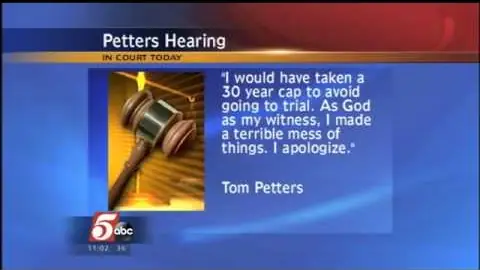
Years later, in a 2013 hearing seeking a shorter sentence, Petters finally admitted guilt: 'This is my only chance to clear my conscience and soul. I made a horrible mess of things.' [SOURCE: ABI Journal citing WSJ; MPR News] Judge Kyle dismissed his request, writing that Petters had 'tried to pull off one final con.' [SOURCE: MPR News / KROC News]
On April 8, 2010, Judge Richard H. Kyle sentenced Thomas Joseph Petters to 50 years in federal prison before a packed courtroom in St. Paul, Minnesota.
Prosecutors had sought the statutory maximum of 335 years. The defense argued four years would be sufficient. Kyle chose 50. He recommended the Bureau of Prisons house Petters in Minnesota, to allow him to remain close to his family including two young sons. [SOURCE: AP sentencing; MPR News]
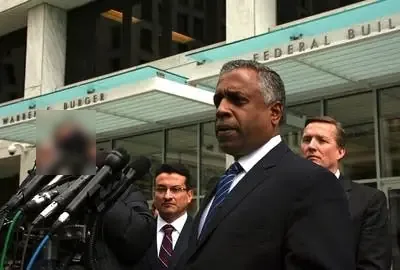
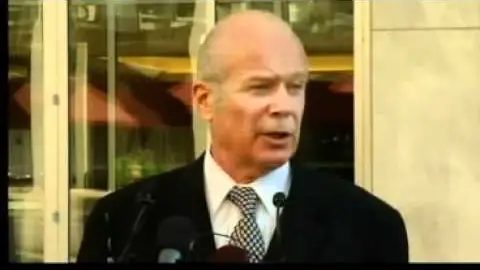
US Attorney B. Todd Jones at sentencing: 'Tom Petters was a fraud. Tom Petters built his life on deceit and lies, and today the check came due.' [SOURCE: AP sentencing coverage, April 8, 2010]
Judge Kyle: 'Mr. Petters was captain of the ship.' [SOURCE: AP] The phrase is precise. Petters did not claim he was absent while associates committed the fraud. He was there. The judge found he knew. The jury had found the same.
His victims included hedge funds — institutional money from sophisticated investors — and pastors, missionaries, and retirees. The range reflects both the scale and the structure of the scheme: PCI targeted a wide network through multiple channels, including religious community networks where trust was built on shared belief rather than financial diligence. [SOURCE: AP sentencing]
His projected release date: April 25, 2052. He would be 95 years old. Even with maximum good-conduct credit, he would spend approximately 41 more years in prison from the date of sentencing. US Attorney Jones called the 50-year term 'fair and just' and described it as 'tantamount to a life sentence.' [SOURCE: AP]
COMMUTATION — STATUS: The brief for this case noted a potential commutation in 2025 and flagged it for verification.
No confirmed commutation of Tom Petters' sentence has been found in primary sources as of September 2026.
This piece does not state a commutation occurred.
If a commutation is confirmed by primary source (DOJ / BOP / White House), update this section with specific date, authority, and scope of the commutation before publication.
Current documented status: serving 50-year sentence, federal prison.
The series thesis for Case 018 is built into the prologue: the stores were open and the planes were flying. The specific thing Petters did differently from Madoff was use the fraud proceeds to buy operating companies.
Madoff's fraud ran inside the credibility of Wall Street's institutional establishment. Stanford's ran inside Antigua's political relationships and cricket culture. Holmes's ran inside the California tech mythology of the Stanford dropout visionary. Petters' ran inside working businesses with real employees, recognisable brand names, and operating revenue.
The investors who wanted to verify were shown things they could verify. Polaroid was real. Sun Country flew. The chairman was charitable and prominent in a community that knew him. The documentation looked like documentation. The fraud was specifically what was not there: the supply chain, the purchase orders, the consumer electronics changing hands between PCI and the retailers.
This is why it lasted fourteen years. And this is why recovery has been limited for victims: unlike Madoff, where money was invested but never deployed and could theoretically be clawed back as uninvested principal, Petters' money was spent. It bought Polaroid. It kept Sun Country flying. It paid Fingerhut's employees. The money was in the businesses.
His is often ranked as the third-largest Ponzi scheme in US history, after Madoff's and Stanford's. You have likely not heard his name before this series. That is the precise thesis: the invisible. He ran a fraud behind real companies in a state that does not think of itself as a fraud capital, and when it collapsed the businesses collapsed with it, and the name did not stick the way Madoff's did.
The stores were open. The planes were flying. And then they were not.
Tom Petters built a warehouse. Bernie Madoff invented a trade. Both showed investors a supply chain that was never there — and Petters used the proceeds to build something real enough that nobody needed to look at the supply chain for fourteen years.
IDENTITY
CASE RECORD
 ▶ WATCH


 ▶ WATCH
 ▶ WATCH
 ▶ WATCH