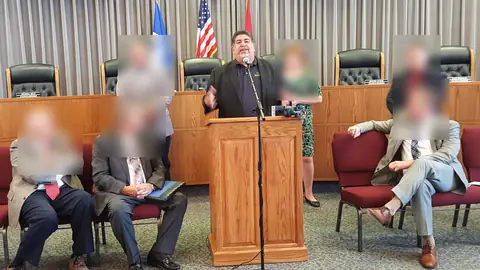
Jorge Perez
TAP TO READ FULL NARRATIVE — THE BILLING LICENCE (700 WORDS)
The hospital was real. The building was real. The billing codes were real.
When Jorge Perez acquired struggling rural hospitals — small facilities in states with limited medical infrastructure — he acquired with them something far more valuable than the buildings: Medicare provider numbers and insurance contracts. These are the licences that allow a healthcare facility to bill government programmes and private insurers for services.
Per the DOJ, the operation submitted approximately $1.4 billion in claims to health insurers — mostly private insurers — for laboratory testing, largely urine drug tests and blood tests, billed as if the small rural hospitals had done them when most were done by outside laboratories, and many were not medically necessary. The operation received about $400 million. The patients listed on the claims were, in many cases, patients who never received those tests, never visited those facilities, or could not plausibly have needed those specific tests. The volume was the tell: a small rural hospital billing hundreds of millions in specialty lab work that its physical capacity could not have produced. [SOURCE: DOJ — verify specific hospital count and states]
He was convicted by a jury on June 27, 2022 and sentenced on December 15, 2023 to 100 months — 8 years and 4 months. His brother Ricardo Perez got 6 years and 3 months. The billed figure of $1.4 billion represents claims submitted; the amount actually paid by insurers was substantially lower. [SOURCE: DOJ — verify paid amount before publication]
Medicare billing is structured around provider numbers — identifiers that authorise a facility to bill the programme. A provider number, once obtained, is a financial asset: it allows the holder to submit claims for services at Medicare's established rates. For a scheme designed to fabricate claims, obtaining a real provider number through a real facility is the enabling step. The scheme does not require a fake hospital. It requires a real one with a cooperative or captured billing department.
This is the modern healthcare fraud insight: the institution is the instrument. Perez's rural hospitals were not the fraud — they were the vehicle. The billing department was the fraud. The provider number was the asset. Once those were in place, the volume of claims was limited only by how many patient records could be associated with the facility.
The harm is diffuse and it is enormous. Medicare is funded by taxpayers. Private insurance premiums are paid by employers and individuals. When claims are submitted for services that were not provided, the cost is absorbed into the system and ultimately paid by every participant in it. There is no single identifiable victim in the way that Madoff's investors or FTX's customers are identifiable. The harm is real — it is just spread across everyone who pays for healthcare.
This is the first of three healthcare cases in this series. Taken together, they document the full anatomy of healthcare fraud: fabricated claims (Perez), manufactured demand (Patel — Case 044), and a purchased referral pipeline (Esformes — Case 045).
The category is the largest source of fraud losses in the United States by DOJ measure — exceeding financial fraud, card fraud, and cryptocurrency fraud in annual recovered dollars. The cases exist not because healthcare fraud is new but because the mechanism is under-documented in financial fraud catalogues that tend to focus on markets and technology.
The hospital is a recurring vehicle. The provider number is the licence. The billing department is the engine. This is the shape the next two cases will repeat in different forms.
IDENTITY
CASE RECORD