Barry Minkow
TAP TO READ FULL NARRATIVE — THREE TIMES (700 WORDS)
He served approximately seven years. He was released. He became a fraud investigator — appearing on television, cooperating with the FBI, exposing scams. Then he committed fraud again.
PART ONE: ZZZZ BEST
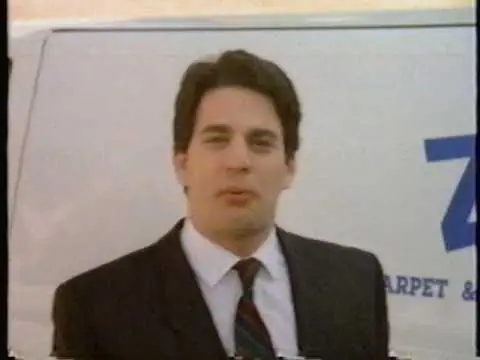
ZZZZ Best was, at its core, a fabricated business. Minkow built a carpet cleaning company — a real one, with real customers — and then inflated it dramatically with fictitious contracts and fabricated financial records. The company's primary claimed revenue came from "restoration work" on buildings damaged by fire or flood — large commercial jobs worth millions of dollars. Most of those jobs did not exist. The properties claimed as job sites were sometimes rented briefly for site visits by investors and auditors. The paperwork was forged.
The company went public in 1986. By 1987 the scheme had collapsed when due diligence by a prospective acquirer began unravelling the fictitious revenue. The market capitalisation at peak was approximately $300 million. The actual losses to investors and lenders were $100 million. A jury convicted him on all 57 counts in December 1988, and on 27 March 1989 Judge Dickran Tevrizian sentenced him to 25 years and ordered $26 million in restitution; the losses to investors and lenders were put at $100 million. He served about seven and a half years and was released in 1995. [SOURCE: DOJ; SEC civil proceedings; contemporaneous press]
PART TWO: THE REINVENTION AND THE SECOND FRAUD
After his release, Minkow built a second public identity as a fraud investigator. He founded the Fraud Discovery Institute and contributed to investigations that resulted in criminal cases. He was credited in press profiles with exposing real frauds; the government would later say he used his relationships with law enforcement to file false allegations. He preached at a church in San Diego and built a significant public role there.
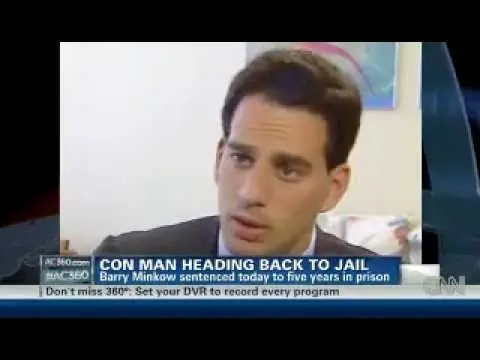
Per the government's case, he was also using his fraud-investigator platform to commit fraud. He shorted the stocks of companies he was simultaneously defaming — issuing public reports attacking companies' financials, causing the stock price to fall, while holding short positions that profited from those falls. He pleaded guilty in Miami on 30 March 2011 to conspiracy to commit securities fraud over the Lennar short and on 21 July 2011 was sentenced to five years and $583.6 million in restitution. He was also taking money from his own church: he pleaded guilty in San Diego on 22 January 2014 to conspiracy to commit mail, wire and bank fraud and to defraud the United States, admitting he took more than $3 million from San Diego Community Bible Church through unauthorised accounts, forged cheques, diverted donations and loans in the church's name, and on 28 April 2014 was sentenced to five more years, to run consecutively. He was released on 6 June 2019. [SOURCE: DOJ S.D. Florida, 21 July 2011; DOJ S.D. California, 22 January 2014; Courthouse News, 28 April 2014]
VERIFIED: Lennar plea 30 March 2011; church plea 22 January 2014; the charge was conspiracy to commit mail, wire and bank fraud and to defraud the United States.
IDENTITY
CASE RECORD
 ▶ WATCH
 ▶ WATCH
 ▶ WATCH
 ▶ WATCH